News
Clean and renewable energy allied with technology to transform the world This is the topic of the moment. There has never been so much talk about global warming and cleaner and more sustainable forms of energy with the power to supply the great population and industrial demand. In times when the planet's future is severely threatened due to the scarcity of natural resources, developing and investing in alternative forms of natural fuels has never been so necessary. There are three main forms of green energy in use in the world today: hydroelectric, wind, and solar. Hydroelectric energy, coming from the tremendous force of water, despite its capacity to supply electricity to entire cities, has a major impact on nature and even on the surrounding regions, as the population that resided in nearby areas had to be relocated and these previously inhabited locations were flooded or demolished to make way for the water. Wind energy is on the rise lately, with many investments and advancements in Brazil, but this form of energy also causes significant changes in the landscape, affects the life of birds in the region (which frequently collide with the wind turbine blades), and also the lives of the closest residents, because of the constant noise of the wind turbines.
Speak with one of our specialists and discover how Pix Force can transform your business
What are solar farms?
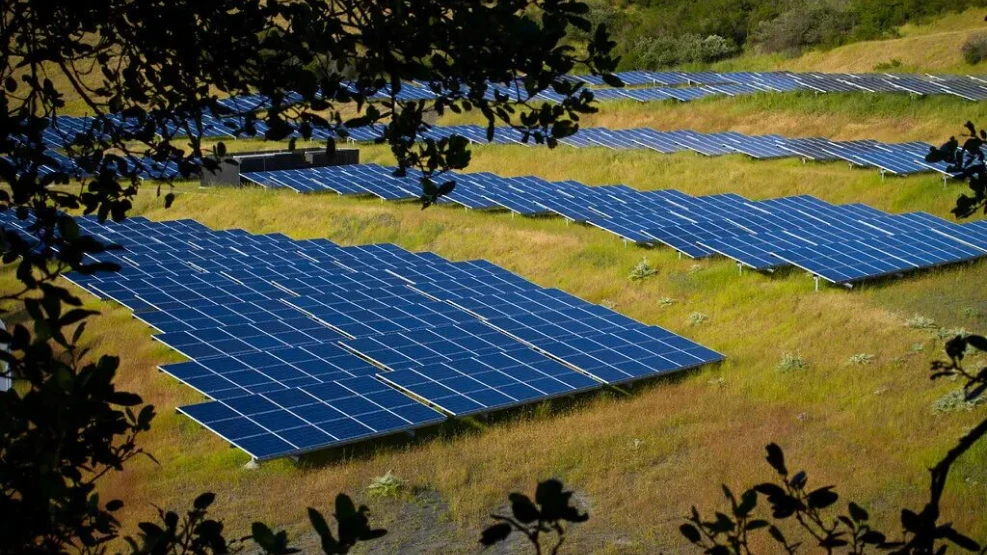
Increasingly, attention has turned to a silent, relatively cheap energy source that does not deeply interfere with nature and people's lives: the energy that comes from the sun. It is a renewable and inexhaustible resource, completely free of pollutants and, considering that Brazil is a privileged country in terms of sunny days, has a lot of energy potential. And so solar farms arise, named due to the "cultivation" of energy. They are also known as solar parks or solar stations. In the same way as large wind farms, with dozens and even hundreds of huge wind turbines, solar farms are large areas comprising thousands of photovoltaic panels receiving sunlight directly, without obstruction from trees and buildings. Unlike residential and commercial systems, solar farms consist of solar panels installed on the ground over many square miles. Instead of supplying energy directly to the end consumer, such as a homeowner or a large business, the farms supply energy directly to the electrical grid and are one of the utilities available. There are different types of solar projects, such as community farms or farms built solely to power generators and data centers.
How big is a solar farm?
The size of a solar station is measured by the power obtained. It can range from tens, hundreds, and even thousands of megawatts (MW). Each MW is equal to 1000 kWs. The largest solar farm in the world is Shakti Sthala, in India, with a capacity of 2,050 MWs (or 2 gigawatts) upon its completion. China, the third largest country in the world in size and the largest in population, despite its enormous land area, concentrates most of its population in the east of the country, near the coast. This characteristic favors the construction of huge solar farms in more remote open areas. Of the 10 largest solar farms in energy capacity, 4 are in China. Another relevant factor for the size of a solar farm is its purpose. Community farms generally produce only between 10 kWs and a few megawatts of power, just enough to supply the community they are intended for.
Why build solar farms instead of installing an urban system?
Farms are cheaper to build and operate than rooftop-mounted solar systems. This is due to the advantages of building and purchasing equipment in bulk, in addition to the ability to choose the best area. This way, one can research and determine the most suitable location: without trees and buildings to cast shadows and with the highest incidence of sunlight per year. Make no mistake: this is not a cheap form of energy to install at home. It is a medium to long-term investment. A simple system still costs tens of thousands of reais. Therefore, the major trend is for this type of energy to be more heavily exploited by large corporations and industries.
And what are the advantages of investing?
Quick and easy installation
Solar panels are easy to install, mainly because they are on the ground. One of the greatest risks of installing urban systems is falling, since the panels are fixed on the roofs of houses and buildings. Because solar panel farms are located on the ground, this risk is eliminated.
Accessible in isolated and remote locations
This is one of the main advantages of solar energy: its reach in remote and hard-to-access areas, as they eliminate the need to install large and costly transmission grids. In these locations, community farms are good options.
Easy-to-maintain systems
The major disadvantage of solar energy has to do with interruptions or obstructions in solar rays, preventing them from reaching the surface of the photovoltaic panels. Since solar farms are built in open areas, without trees and buildings, the panels are subject to other types of problems, such as bird droppings and dust. However, cleaning can be done by rain in the case of large farms, or with a soft-bristled broom in the case of community farms. In both cases, and also in urban environments, there is also the possibility of preventive maintenance. Pix Force has developed a solution for these cases, which consists of applying Computer Vision to detect overheating points on the panels, a problem that impairs performance and can even prevent the system from working. Learn more about this solution on our website.
Extended lifespan
Current systems have a lifespan of approximately 25 years. With this, it becomes clear why the investment is worth it, since the system pays for itself in up to 6 years after installation. Furthermore, the system can provide energy with the same capacity for longer, without significantly losing performance due to wear and tear or requiring much interference in repairs and equipment replacements.

Fabio Caraça
Fábio Caraça is the Chief Growth Officer at Pix Force. He leads Pix Force's transformation into a scalable SaaS operation, combining strategic vision, culture, and high-impact execution.