News
Far beyond the samba-enredo – how technology can change the experience of Brazil's biggest popular festival Considered the largest Brazilian popular festival, Carnival has its roots in the pagan festivals of Antiquity: between November and December, Greeks, Romans, and other peoples celebrated the harvest with plenty of music, dance, and food. With the advent of Christianity, traditional pagan celebrations were incorporated to fit the Christian calendar and re-signified to attract the faithful. The festival changed its date and came to precede Lent, a period of meditation, retreat, and penance that lasts until Easter. Possibly, the origin of the name comes from the Latin carnis levale, which means “to take away the meat.” Carnival was, then, an opportunity for people to let loose and indulge in excesses. During the 40 days of Lent until Easter, the faithful were to withdraw, reconnect with God, and not consume meat. For this reason, Mardi Gras is called Fat Tuesday, signifying the last opportunity for people to commit various capital sins, such as Gluttony and Lust.
Speak with one of our specialists and discover how Pix Force can transform your business
A little bit of history
Mardi Gras parade in the US, 1925 – Image: Bettmann / Bettmann Archive The party evolved along with society. In the 13th century, the first masquerade balls aimed at the nobility emerged in Europe, mainly in Italy. During this period, marked by the rise of the commedia dell’arte, the first Carnival songs were composed in dance rhythms to accompany the parades of costumed people who followed the decorated carriages called trionfi. By the 19th century, Carnival was already a festival of the people all across Europe and in the United States. Costumes diversified and began to represent other characters besides the traditional Italian Harlequin, Pierrot, and Columbine. Large floats, pulled by horses or cars, already featured structures similar to those we know today.
Carnival in Brazil
In Brazilian lands, Carnival began to be introduced by the Portuguese through the entrudo, a somewhat violent game very popular in Portugal. Practiced en masse by slaves and the poorest classes, it consisted of dirtying each other with liquids and other pasty substances, such as water mixed with flour, scented lemon, mud, and even urine. It was heavily repressed by the press and the police, under pressure from the elites. Even with the repression, the people still filled the streets with cordões and ranchos, following musicians and bass drum players (the first street blocks!). Do you know the famous marchinha “ô, abre alas”? The song composed by Chiquinha Gonzaga is considered the first marchinha, composed in 1899. The first samba would only come in 1910, with lyrics by Donga and Mauro de Almeida. Since then, Carnival has only grown and become the largest popular festival in Brazil. Billions of reais move the economy every year and promote brands from various segments.
And what does technology have to do with it?
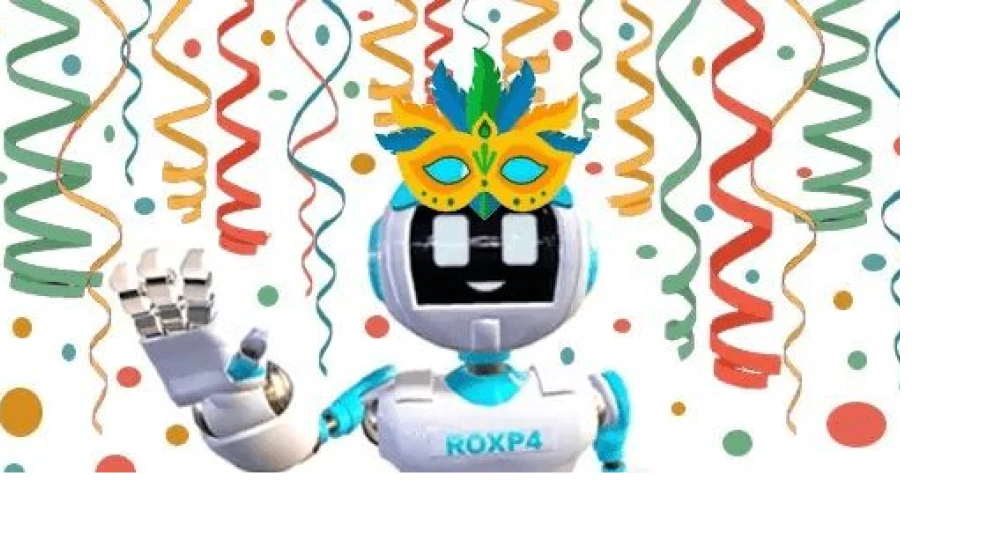
Despite its ancient historical background, Carnival has been receiving more and more investment from companies to ensure innovation and make the festival more future-oriented. And the public has been keeping up with these changes. Costumes follow current memes and pop culture icons, boosted by social media. The cell phone is an essential tool for broadcasting the party in real time on social networks. This year, technology was the theme of the historic Rosas de Ouro samba school from São Paulo. The theme, titled Modern Times, talked about the 4th Industrial Revolution and even brought a robot to the samba avenue. Carnival designer André Machado explained that it wasn't enough to just talk about technology, but also to bring it to the sambódromo. Because of this, Rosas de Ouro launched the Carnaval 4.0 app, which could be used to view the school's sixth float, which was produced to be seen exclusively with augmented reality. The app also features an educational quiz and other augmented reality experiences during the parade, as well as tracking the emotional level of the members in real time as they parade. The school received support from more than 30 companies, including giants such as Dasa, Nokia, People+Strategy, and GS1. This made it possible to parade robots like ROXP4, the protagonist of the theme, and a Swiss robot that distributed drumsticks to the band members. The school's parade followed a timeline, passing through the 3 previous Industrial Revolutions and telling a bit of the history of technology. Another group to bring technology to the Anhembi sambódromo was Águia de Ouro, champion of the 2020 São Paulo Carnival, as part of its theme on the evolution of human knowledge. The title of the theme "The power of Knowledge - if knowledge is power... He who knows makes the moment, doesn't wait for it to happen" dealt with great human inventions, from the discovery of the uses of fire and the wheel to a future of hope in sustainability and robots. Other samba schools, both from Rio and São Paulo, innovated by using technology on a smaller scale in their parades. LEDs in costumes, apps, and augmented reality filters for Instagram, in addition to cutting-edge applications on the floats, are some examples.
Far beyond plot themes…
Technology didn't just make its way into Samba during this Carnival. Various devices were used to improve safety in street carnival blocks in different states, including Artificial Intelligence and Computer Vision. In São Paulo, 50 State Government drones were put into service to monitor the 644 blocks parading through the city, identifying crime suspects and finding missing people. The city hall provided four drones to assist officers in traffic monitoring and to prevent conflicts. The controversial facial recognition is being tested by the Salvador police through the Face Check app. The idea is to test the resource, which will be used at strategic points during Salvador's Carnival. With the app, officers can use Computer Vision to cross-reference suspects' information with a database.
Make way, for the future wants to pass through…
It is in this spirit of innovation (and renewal!) that Carnival has been reinventing itself in recent years. The trend is for Brazil's biggest party to gradually shape itself. The goal is to increasingly integrate the latest technological releases to make the experience richer, more immersive, fun, and, above all, accessible to all audiences. Brazilian Carnival is a historically popular tradition, with deep roots in Afro-Brazilian religion and culture, inherited from the slavery period. So much so that its main groups and carnival societies, unlike the colonial period, are located in communities and peripheral areas. Therefore, talking about technology and the future represents a challenge. It is necessary to show that the people can have access to this future and that it is already happening in various ways. With so much potential, it is up to governments and companies focused on technological innovation to unite the people's party with technology, through partnerships and investments. It is already general knowledge that Carnival generates a significant return, not only in financial terms, but also in terms of engagement and building bonds, which is why the most avant-garde brands did not take long to appear as sponsors in VIP boxes, street blocks, and samba schools. Visibility and credibility create a more intimate relationship with people, who see the brands in a different light and, consequently, tend to elevate their value.

Fabio Caraça
Fábio Caraça is the Chief Growth Officer at Pix Force. He leads Pix Force's transformation into a scalable SaaS operation, combining strategic vision, culture, and high-impact execution.