News
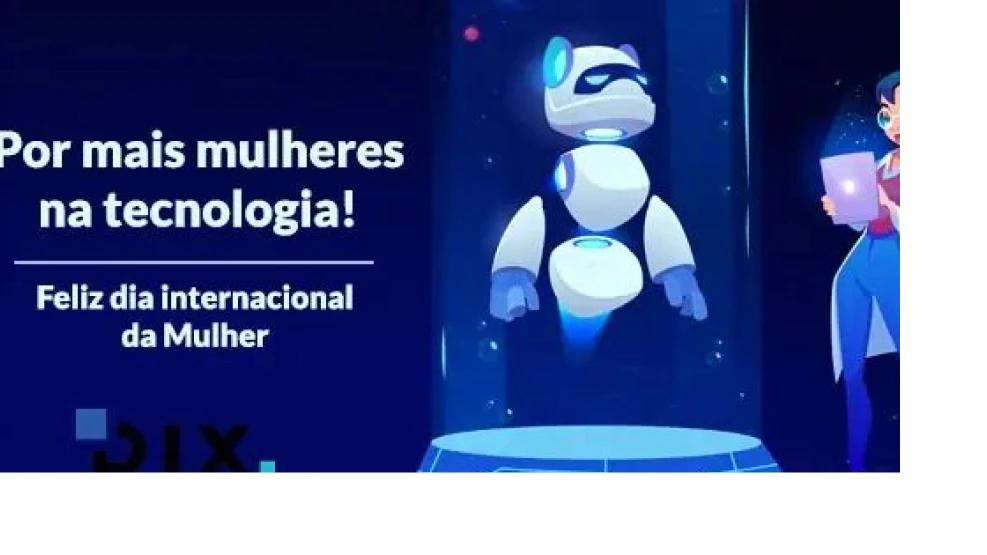
Why diversity is important for Artificial Intelligence to be truly intelligent The technology sector is still extremely male-dominated. The number of women in technology training courses, such as Computer Science, IT, Information Systems and others, is still much lower than that of young men, and the root of this problem goes deep into the sexist structure of society, which stereotypes girls from early childhood as incapable of or less inclined toward Exact Sciences. This type of sexism can be subtle and silent, like taking girls straight to the doll aisle and boys to the toy cars and video games aisle in the toy store, but it can also be more blatant and even dangerous, such as harassment of various types in environments with low female presence. Such stances and attitudes end up discouraging girls from investing time and effort in some fields, out of fear of hostility and devaluation. ALSO READ: • Learn all about Computer Vision
• Efficient inventory tracking: find out more!
• What is machine learning?
Speak with one of our specialists and discover how Pix Force can transform your business
Historical inversion
It was not always like this. In the 1970s, the first Computer Science class at IME had 14 female students and only 6 male students. In the 2016 class, however, out of 41 students, only 6 were women, totaling less than 20% of the class. In the 70s and 80s, the computer was a large calculator for performing more complex calculations and processing data, making it an important tool for secretarial duties, a profession heavily associated with women. Because of this, courses in the field were majorly sought after by women who wanted to advance their careers. It was only after the personal computer (PC) entered people's homes and daily lives in the 90s that the computer gained a "masculine" aura, mainly due to the explosion of the gaming market. Before that, computer courses had more to do with mathematics and calculus and were intended for women who wanted to specialize in order to be better teachers or secretaries. Historically, there has always been a higher concentration of women in higher education in specific areas: humanities and social sciences, languages, arts, and some health fields, such as Nursing. Men, on the other hand, are concentrated in the STEM fields, such as engineering and technological sciences, like Computer Science, which has a male audience of over 80%. This data represents in a far from subtle way the sexual division of the labor force in society and how tasks are distributed from the time of college entrance exams between "women's courses and men's courses." Courses with more social "prestige," such as Law and Medicine, present a better balance of male and female audiences, proving that women are not incapable of passing or keeping up with courses considered "difficult."
Is there a lack of representation for women in technology?
There have always been women interested in Science, and many of them contributed significantly to advancements in all scientific fields, in addition to creating inventions that are still used today. However, why do we hardly hear about them? How many women scientists can you name? Probably three or four, if you are already in the field or had a privileged education. This stems from the erasure of women in scientific history, with their inventions and discoveries stolen by men or simply ignored until a man revived the research and received the credit. In the 19th and 20th centuries, several women scientists accompanied their husbands, who were also scientists, and constantly suffered from neglect and lack of recognition, which went entirely to the male figure. A study conducted by Microsoft presented a reality in which women themselves feel less capable of pursuing careers in the STEM fields, and that this is a feeling that starts in childhood. Interest and aptitude generally begin to emerge at age 11, but from age 15, the dropout rate begins. The study shows that, among the various reasons for this, are the lack of female role models in the field to serve as inspiration, a lack of confidence in equality between men and women, and a lack of contact and encouragement in the areas of calculus and programming before college.
Stereotype of the antisocial nerd genius
Within these environments, even academic ones, there is the caricature of the super-intelligent nerd who loves video games and computers and is antisocial. This stereotyped figure was further rooted in the collective imagination and pop culture with the popularization of the American TV show "The Big Bang Theory", which depicts the adventures and friendship of 4 friends and scientists (all men) and addresses that, despite being brilliant minds, they cannot relate to women and "ordinary people". The protagonists each represent a stereotype attributed to the geek genius, and several themes are explored throughout the seasons: arrogance and impatience with people outside the academic and scientific community, OCD (obsessive-compulsive disorder), excessive shyness and social awkwardness, and even more delicate topics such as machismo, misogyny, and harassment. The masculinization of scientific and technological areas ends up pushing girls away because of these stereotypes, both due to a lack of identification (we are unlikely to enter a place where we do not feel welcomed and represented) and the "boys' club" aura, in addition to the structural apprehension felt regarding gender relations.
The greatest evil of all: machismo
Structural machismo in companies and laboratories is another major factor contributing to women not feeling comfortable, not to mention the pay gap. According to the National Household Sample Survey (Pnad), by IBGE, women earn 30% less in the Information Technology (IT) field compared to men in the same position and with the same qualifications. Because these are male-dominated environments, women are seen as "intruders" and jokes quickly arise, as well as attempts at disqualification, silencing, and mansplaining (when a man explains to a woman something she already knows), in addition to the famous "brotherhood," where "brothers" protect each other. Many women report having to prove all the time that they know what they are talking about and, even so, they are continually ignored or diminished. It is necessary to constantly deal with an atmosphere of tension and caution, as attitudes are judged regardless of the situation. For example: if a woman is firm, serious, and reacts to disregard, she is judged as aggressive, hysterical, and "on her period"; on the other hand, if she tries to remain neutral, she has no personality or cannot handle the pressure. In other words, there is no way out for them.
Why do we need more women in technology?
Artificial Intelligence and machine learning are two fields of Computer Science that are closely related. Basically, AI seeks to simulate human intelligence, while machine learning seeks to teach machines to behave like humans. In all cases, it is humans programming machines to represent human actions in every possible aspect, from the simplest movement to complex tasks of understanding and reasoning. One of the greatest challenges for researchers and scientists in these fields is teaching the machine to react to the unexpected. Animals react by instinct, humans react through quick reasoning. Machines, however, need to be specifically programmed to perform the activities they were designed for. And the people who map out all these processes, data, and codes are, for the most part, men. For AI to become increasingly precise, there needs to be more quality in training parameters and algorithms. This is where the programmer's bias comes in, as they will determine the datasets to be passed to the machine. The less diverse the birthplace of AIs is, the more errors and flaws are born along with them. In a scenario where AIs and super-intelligent machines are increasingly present in society and decisive in various fundamental processes, such as hiring processes, facial recognition, and even banking and legal operations, it is essential that biases other than the standard male one are taken into account. Currently, about 12% of the people involved in the research and creation of Artificial Intelligence are women. In a world where approximately half of the population is female and women make up about 48% of the workforce, it is unacceptable for a machine equipped with artificial intelligence to make mistakes like BERT, a Google technology that associated 99 out of 100 words like jewelry, baby, home, money, etc. with men. Or an Amazon hiring system that discriminated against female names. It is also necessary that AIs are not led to perpetuate biased behaviors, like Tay, the Microsoft chatbot created to interact with Twitter users by learning millennial language and which, in a matter of hours, was reproducing sexist and racist remarks.
And what is the solution regarding women in technology?
First, it is important to emphasize that there is no quick and easy solution. Identifying the problem already requires a high degree of reflection and understanding of how society is built and based on strong and historical processes of excluding women as protagonist characters worthy of recognition. Therefore, both men and women need to understand their roles and review their attitudes. Men have the task of understanding behaviors and actions both inside and outside the work environment. One example is helping to eradicate toxic behaviors from friends and coworkers. For women, what is important is to understand that the feeling of not belonging to an area of study or work is nothing more than an unfair social imposition. Forming collectives to develop projects that welcome, encourage, and promote Science and Technology is one of the best ways to start. In addition, parents should spark and stimulate girls' curiosity for science and mathematics, through countless playful tasks and even with toys and educational content. Teachers should always reinforce female students' confidence and treat them the same way as boys, instead of separating "boy" and "girl" activities. All of this takes time, requires effort and personal dedication, but every small change in attitude counts a lot for the changes to be effective and lasting. It is not easy to change centuries of deeply rooted ideas. Gradually, we are working to deconstruct them, and in this way, not only AIs but also our society evolve and improve as a whole, creating a fairer and more egalitarian environment for everyone.

Fabio Caraça
Fábio Caraça is the Chief Growth Officer at Pix Force. He leads Pix Force's transformation into a scalable SaaS operation, combining strategic vision, culture, and high-impact execution.