News
Generative Adversarial Networks, popularly known as GANs, is an unsupervised machine learning and deep learning technique, proposed in 2014 through an academic research paper. It is an approach to generative modeling using deep learning methods, such as convolutional neural networks. If you want to know what GAN networks are and how they are used in image production, stay tuned to this content! READ ALSO: • What is aerial photogrammetry?
• What is image processing?
• Industry 4.0 in Brazil: learn more!
Speak with one of our specialists and discover how Pix Force can transform your business
How does it work and what are GAN Networks?
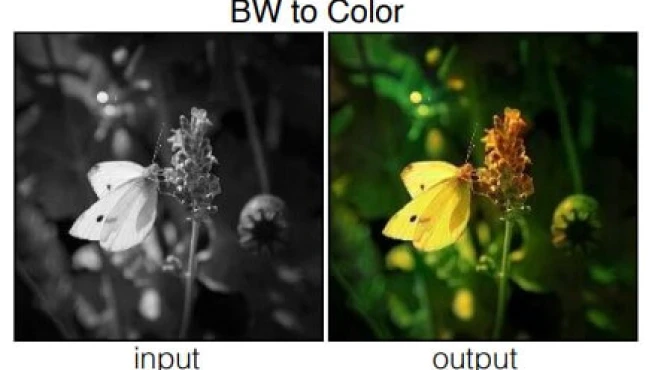
Generative modeling is an unsupervised learning task in machine learning that basically involves automatically discovering and learning the regularities or patterns in input data. This happens in such a way that the model can be used to generate or produce new examples that could plausibly have been drawn from the original dataset. For example, if you feed the right kind of neural network with a large collection of images and tell it which ones show dogs and which ones don't, it can eventually learn to discriminate on its own which new, unlabeled images are cats and which are not. A GAN network can be thought of as a pair of competing neural networks: a generator G and a discriminator D. The generator receives as input random noise sampled from some distribution and attempts, thereby, to generate new data intended to resemble real data. The discriminator network tries to discern real data from generated data. As the discriminator network improves its ability to correctly classify the data, metadata is sent back (or “backpropagated”) to the generator network to help it do a better job of trying to fool the discriminator network. Deep learning pioneer and Facebook's Director of Artificial Intelligence, Yann LeCun, even went on to say that GAN Networks were “the coolest idea in deep learning in the last 20 years.” Some researchers from universities and corporations around the world have started creating variations of GANs that perform new classes of tasks. For example, conditional GANs provide additional information to a generator and its discriminator partner, imposing conditions on the generated image. In the following examples provided in a paper written by researchers at the Berkeley AI Research Laboratory, the generator created a colorized version of an existing image and a night view of a daytime image: Image: What are GANs and how do these networks work?
Source Some of the same researchers from Berkeley also developed a technology called Cycle GANs, in which such generated images can happen in both directions – for example, converting a horse image to look like a zebra and vice-versa, check it out below: Image: What are GANs and how do these networks work?
Source
GANs Network in Pix Force projects
Our researchers at Pix Force have been exploring various ways to apply GANs for our clients. Here are some of them: • Ways to use conditional cycle GANs for mapping between visual images and infrared images
• Considerable improvement in the resolution of aerial images
• Text labeling with semantic tags
• Generation of text belonging to specific semantic categories
The last two categories are especially interesting because most discussions about GANs revolve around image generation, but these techniques can also be applied to other types of data. GAN networks offer many exciting possibilities! Get in touch with us!

Fabio Caraça
Fábio Caraça is the Chief Growth Officer at Pix Force. He leads Pix Force's transformation into a scalable SaaS operation, combining strategic vision, culture, and high-impact execution.