News
Datasets are used so that systems can learn and identify a specific type of pattern. For this learning to happen, the system needs to be fed with the appropriate information, which is selected with a specific result in mind. From this, it is possible to solve a large number of problems without human intervention. Image: Datasets and machine learning: know their characteristics
The concept of Machine Learning (ML) is realized through the development of algorithms capable of learning and detecting patterns. For these algorithms to work, they need to be fed by a series of data that, if programmed in the correct way, can make the mechanism work with little or no human interaction. The sets of these data are called Datasets. According to Luis Felipe Zeni, Deep Learning Engineer at Pix Force, responsible for strong software engineering skills, Datasets are defined as a collection of annotated data with the supervision necessary to train some type of model based on Machine Learning (ML). Within Pix Force, these models are based on the concept of Neural Networks. We recently talked about Neural Networks, mechanisms that, through ML, distribute information similarly to the human brain. Within Machine Learning, it is possible for processing elements to come together to interpret information in parallel, working through layers. Datasets are then the material that feeds these layers. Want to understand what Neural Networks are and how they work? See here .
Speak with one of our specialists and discover how Pix Force can transform your business
Understand the training process based on datasets
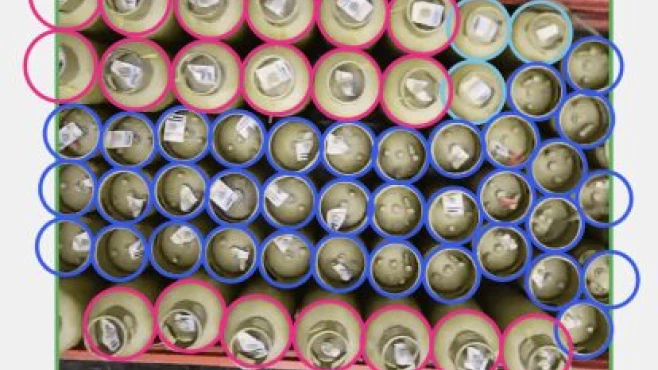
To understand how Neural Networks use Datasets to be trained, we need to understand the concept of annotations. Annotations are the differential criteria that define the expected result through a Neural Network process. They function as templates for the type of responses desired at the end of the performance, and can be divided into classes, points, bounding boxes, polygons, images, and much more. [caption id=”attachment_3208” align=”alignleft” width=”174”] Image: Datasets and machine learning: discover their characteristics
Example of annotated image[/caption] Class annotations serve to classify a specific aspect of an image. For example, if the goal of the process is to differentiate between images of dogs and images of cats, the annotations used must be images of dogs and cats. The richer the annotations, the more material the network will have to understand the difference between the two aspects, and the better the final responses will be. Still regarding annotations, Zeni highlights that some criteria must be taken into account. The quality of the images becomes very important, since details of the dog and the cat, using the example given above, need to be clear. It is also important that there is a minimum of 500 samples for each class, and that they are equally distributed among the types of responses expected. Lighting and physical space must also be taken into consideration, and it is very important that those responsible for collecting the annotations are well guided.
Backpropagation, the most important neuron of a network
Backpropagation is the method of readjusting the weights of Neural Networks, that is, when a result is reached after training. From there, an error rate called Loss is calculated, which is where the weights between the neurons are readjusting. The main function of Backpropagation is to correct the weights of all layers, starting from the output to the input. This happens through a calculated error, and Backpropagation works by angling the inputs and outputs of the neural networks, within a Deep Learning process. For this, two phases are required: the forward pass and the backward pass. In the forward pass phase (training), the output prediction is obtained, which means it is when you predict, through the inserted annotations, what final result will be delivered by the network. This phase is also known as the propagation phase. Meanwhile, the backward pass identifies the gradient of the loss function in the final layer, which ensures the chain rule, updating the weights of all layers of the network as if it were a calibration.
Understand the application in practice: datasets and machine learning
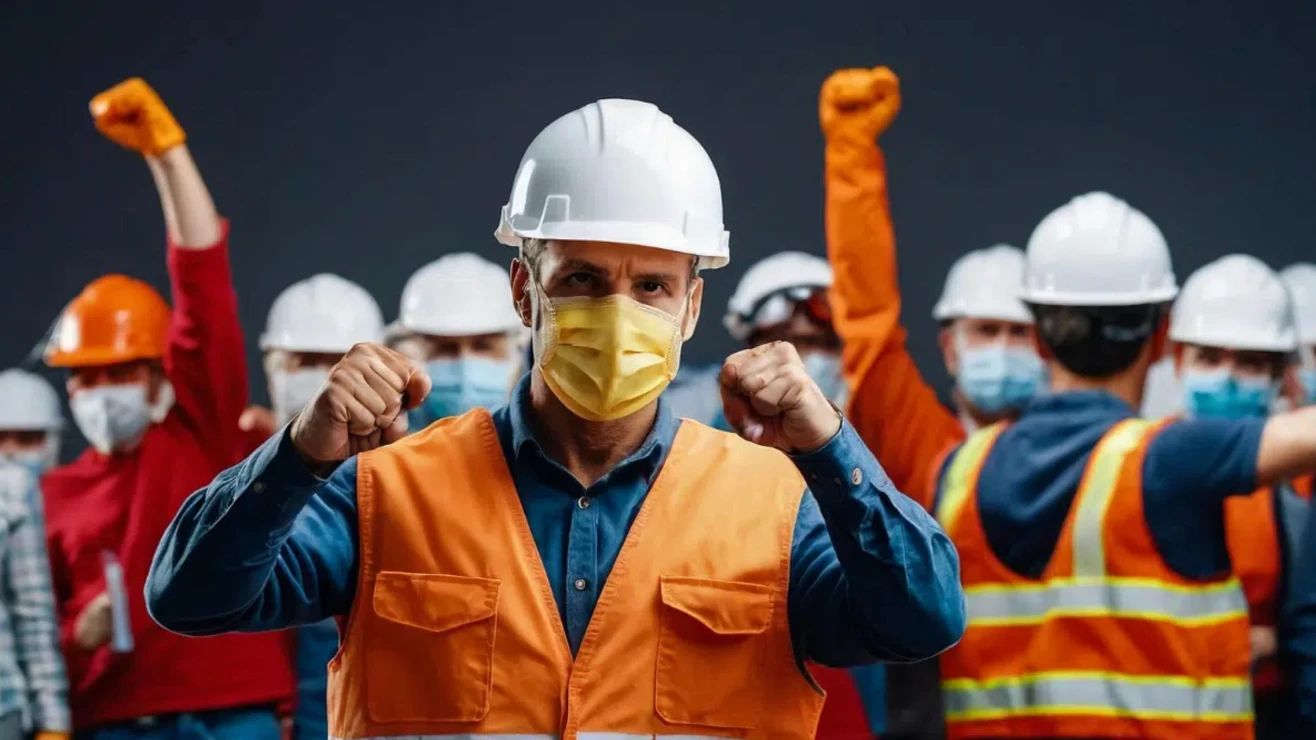
Neural Networks are mainly used to create Artificial Intelligence (AI) systems. When we talk about the annotations required to create this Machine Learning (ML) system, we also talk about Computer Vision, as patterns are defined through images. The utility of a Neural Network is similar to that of all man-made machines: to save time and enhance a specific end result. Haven't learned about Artificial Intelligence and Computer Vision yet? Learn here. Among the practical examples of Neural Network applications, we can mention weather forecasting, where information about wind speed, cloud formation, and rainfall history is entered, and a response is calculated that predicts the weather for the following days. The same happens in the Computer Vision example: the network understands image information and can classify or separate them based on the information they contain. These systems are capable of solving a large number of problems, including identifying Personal Protective Equipment (PPE) and workers' body temperature. Created by the startup Pix Force, Pix Thermo works by automatically identifying safety-related specifics. The solution, which is considered 100% effective, addresses a pain point identified during the COVID-19 pandemic: protecting the company's employees and collaborators as much as possible. The function of the device is, through specific sensors, to measure body temperature quickly and reliably. Likewise, it also uses pattern recognition to perform facial identification and document reading. Thus, the employee is correctly identified, has their use of (PPE) assessed, and their temperature checked. The idea is for Pix Thermo to validate various issues quickly and effectively, applying technology to solve latent market pain points. Want to keep learning? See here how a Computer Vision system is created.

Fabio Caraça
Fábio Caraça is the Chief Growth Officer at Pix Force. He leads Pix Force's transformation into a scalable SaaS operation, combining strategic vision, culture, and high-impact execution.