News
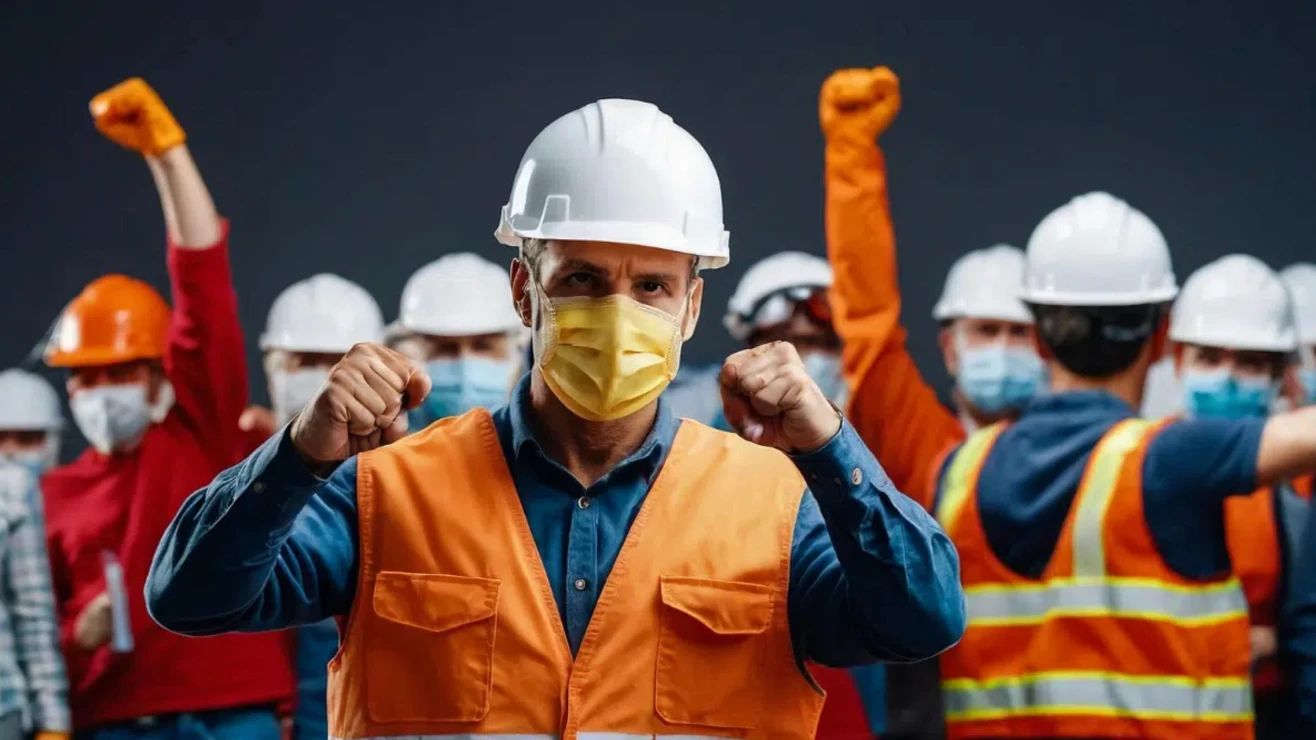
Popularized in the 1970s, Computer Vision has been expanding through the years, and is far from stagnating in its evolution. Considered safer than human vision, the technique today is capable of solving industry pain points in a practical and efficient way, enabling companies to scale exponentially and stay ahead in their sectors. Image: Introduction to computer vision: from past to future
By definition, Computer Vision (CV) is the branch of Artificial Intelligence (AI) that captures and interprets images, replicating functions conditioned to human vision. In practical terms, this means that the technology is capable of not only capturing images, but also distinguishing, classifying, and grouping them according to a previously stipulated pattern. Want to know more about Computer Vision and Artificial Intelligence? See here. However, to evolve and reach the present day transforming standards, Computer Vision (CV) went through several processes. The first record of the use of CV systems happened in the 1950s and, at the time, the resources could classify objects into simple categories, such as round and square, detecting their boundaries. In 1972 the company Texas Instruments created the world's first digital camera and, three years later, in 1975 the Cromemco Cyclops became the first digital camera sold on the market capable of connecting to a computer. From there, and with the creation of the first sensors, it became possible to interpret the images. The first CV projects aimed to recognize and interpret texts, both handwritten and typed, through optical character recognition. The idea arose so that blind people could be better integrated into the market and, to this day, this branch of AI plays an important role in this sector. There are many ways in which Computer Vision (CV) works to assist in the inclusion and quality of life of blind people. Assistive Technology, the name used to define the group of resources and services that provides people with little or no vision with access to products, resources, methodologies, strategies, practices, and services, has Computer Vision (CV) as a great ally. An example of this are games developed for entertainment and even assessment of blind people. As this branch of AI is still an evolving field, most of them remain in the research and testing phase, but they can already be considered a clear example of how technology works to assist various social pillars, such as health and education. Games - initially made for non-atypical people - had a great importance in the evolution of CV, as the boom of gaming helped to popularize the technology. The popularization of the internet and video games in the 1990s brought great advancement to technology and, above all, to Computer Vision (CV).
Speak with one of our specialists and discover how Pix Force can transform your business
Surpassing reality
Starting from the first decade of the 2000s, technological advancement began to scale rapidly, bringing resources to the population that previously seemed impossible. One of the techniques that best exemplifies the tremendous advancement that Computer Vision (CV) processes have been gaining is Deep Fake. Popularized in 2020, the resource is capable of replacing the image of one person with another, or even creating the image of a non-existent person, in video recordings. The term mixes the expressions "Deep Learning" and "Fake", which means it uses the hierarchical model created by Deep Learning to make machines learn human behavior patterns and produce a false, or fake, situation. The product of Deep Fake is a video capable of reproducing a person's expressions, appearance, and even voice. In general, they are created in three stages, the first of which is responsible for capturing as many images as possible of a person, with varied expressions and lighting - here, the more, the better. Next, the movements of a second person are recorded, which will serve as the base for the video. Finally, the merge of the captured material takes place, giving birth to the video "that never happened."
Learning: the curious paradox between employees and machines
Throughout the long journey traveled by Computer Vision (CV) so far, a great paradox is created in the evolution of the role of those responsible for the operation. When the first CV operator employees emerged, their role was, above all, to research. It was the employee's responsibility to also be a researcher, who manually collected all the data to be used in the process. The difference between them and today's employee is that, through various branches of Artificial Intelligence (AI), the machines themselves become capable of thinking, using Datasets to automatically feed Neural Networks responsible for defining patterns. The operator, then, takes on the role of handling the technology, which can be applied in industries across various sectors, without the need for a specialist. “From the second decade of the 2000s, a new revolution began to emerge, and we are now riding this wave: it is the revolution of Deep Learning, an area of Artificial Intelligence. Ways were found to train Neural Networks, which are technologies that have been used for a long time, but now, by combining available hardware with a group of available images and an improvement in processing algorithms, we can begin to train neural networks that can learn from examples,” says Horácio Fortunato, Research and Development Coordinator at Pix Force. Regarding the constant changes in AI, Fortunato also adds: “The training of Neural Networks is a revolution that continues today. The big difference between what was done before and what is done now is that before, the programmer had to think about how to extract information from the image using meticulous operations. With the evolution of Neural Networks, it is the network itself that learns from examples”.
Discover Success Stories
There are some cases that perfectly exemplify how Computer Vision (CV) has been actively participating in evolutionary processes within various business niches. Sentiment analysis, also known as emotion mining, is a technology that can interpret how customers react to products in a storefront window, for example. All of this happens in real time, through the expressions they show. An analysis of this type becomes safer, as do many other CV projects, than an evaluation made through human labor, since the presence of an employee can make people feel inhibited. In addition, one person may interfere with or misinterpret another's reaction. Image: Introduction to computer vision: from past to future
Another facial recognition function that is being highly explored exists within the medical field, more specifically to assist people with major physical limitations. The Magazine of the São Paulo State Research Support Foundation (Fapesp) recently published an article about a CV system that makes it possible for wheelchair movements to be controlled through the recognition of mild facial expressions, such as raising eyebrows and blinking. Detecting anomalies is also a task that has received major investment in CV technologies, as precision and safety are, in this case, of paramount importance. Natural disasters, such as mining dams that overflow due to floods, are an example of this. For the Neural Network to perform its role, images of the dam in its natural state are collected and anything different from that is identified as out of standard. A Computer Vision (CV) solution model created to act in the biological field is another example of a successful solution. Called U-Net, the Neural Network works with a set of images in the Department of Computer Science at the University of Freiburg, Germany. Its function is to detect diseases such as cancer early through cell segmentation. Many sectors have received various benefits from the AI branch that has revolutionized the industry. Tracking systems within a production chain, for example, can guarantee the quality of a product, as well as speed up its identification in recall cases. Likewise, interpretations of medical exams have achieved greater precision, as well as counting animals in large areas, volumetry calculation, authentication and facial recognition, and robotics systems. It is undeniable how applying Artificial Intelligence (AI) solutions within the industry can make it scale rapidly in relation to the competition. In the same way, technology has facilitated, or even made viable, processes that previously seemed unrealistic.
Pix Counter: further advancement in production lines
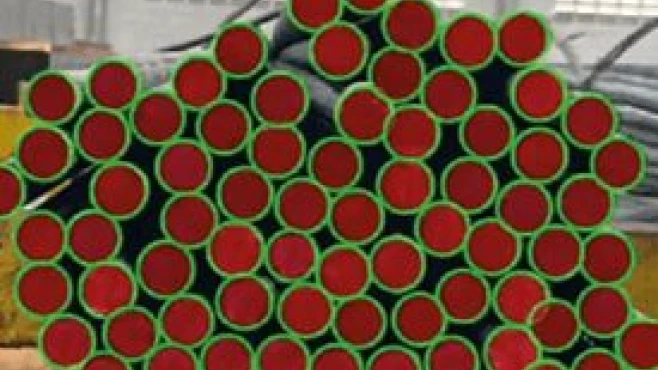
[caption id=”attachment_3203” align=”alignleft” width=”275”] Image: Introduction to computer vision: from the past to the future
Metal bar counting made with the Pix Counter[/caption] An example of disruptive technology that optimizes industrial processes, Pix Counter operates within production chains. Through sensors and RGB cameras, this Computer Vision (CV) solution is designed to count items at high speed, operating with an accuracy above 98%. Regarding the reliability of the numbers, the solution even exceeds human capability, since it is automated. The Piracicaba unit of ArcelorMittal, a multinational steel producer, carried out the process of counting steel bar bundles using human labor. With the implementation of Pix Force's solution on its production line, the company now relies on an automated, fast, and precise counting method. A single bundle of steel bars, which previously took between two and three hours to be counted, can now be counted in about one minute, ensuring agility and safety to the process. Furthermore, the solution also brings accuracy to the verification of sold items, as the steel bars are produced by weight but sold by unit. This forced the multinational to estimate the quantity of bars sent for distribution based on the weight of the bundles, without being able to obtain the exact number of items being destined for the international market. Learn more about Pix Counter and its applications here .
Deeptrack: a leap in the mining industry with the help of drones
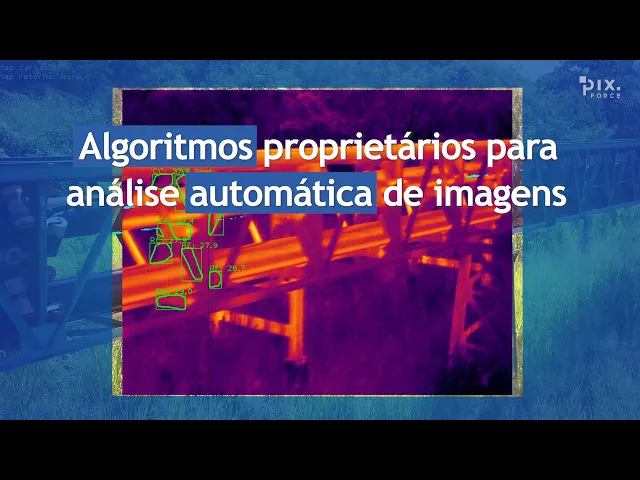
Another example of a solution that optimizes processes occurs, this time, in the mining industry. Called Deeptrack, it introduces drones to the inspection of logistics carried out by conveyor belts, surpassing human capacity to perform the task. https://youtu.be/Nu__1W8cLGk?si=4muKyqPGK9x1Xhfi Want to know more about Deeptrack? Discover more here. The aircraft equipped with infrared and RGB sensors are capable of pinpointing individual temperatures and the georeferenced location of each belt roller, preventing overheating and subsequent operational shutdowns, which could cause larger fires.
Best cost-benefit
When thinking of such highly technological solutions, most people tend to wonder if the cost-benefit is effective. For this, it is important to understand how much benefit this investment can generate for the company in question. See here how much it costs to create a Computer Vision project. Computer Vision (CV) projects typically allow industries to operate with a leaner team of employees, relieving those who performed extremely tiring and dangerous tasks and building a more strategic team. Likewise, time-consuming processes are carried out quickly, and with accuracy superior to human labor. We know how much the pillars of safety, time, accuracy, and good utilization of the staff can be beneficial for a company to scale exponentially. The idea of applying CV within industrial sectors is precisely to resolve latent pain points related to processes that are usually slow, unsafe, and ineffective. Even so, it is important to understand that a new project only makes sense if it brings advantages. The idea is for the system to be capable of genuinely reducing costs, especially those linked to predictive maintenance. For there to be an efficient cost-benefit, the application needs to bring visible results over time, and not just in an isolated way. Likewise, managers and other employees must be aligned with the new way of working.
Pix Force: More Accessible Technology for the Market
Officially in the market since 2016, Pix Force emerged to develop solutions through Artificial Intelligence (AI) and Machine Learning, generating solutions for different sectors through the automatic acquisition and interpretation of images and videos. The company, which takes on real-world challenges, is focused on the development of new technologies capable of solving the latent pain points of the clients it serves. The companies that come to Pix Force in search of CV solutions are those looking not only to make processes more efficient but also to make production environments safer, since with the use of machines, employees are spared from dangerous tasks. From there, the sector is also able to encompass wider-reaching technological mechanisms, making larger steps towards large-scale growth viable. The startup's co-founder, Daniel Moura, explains the importance of working in partnership with clients who invest in innovation, making a difference in fostering competitiveness and economic growth. "The clients we have been working with, besides being references in their sectors, are companies that have a lot of merit in the aspect of innovation. We serve large corporations that are willing to work to incorporate technology into their production processes, improving their market performance," says Moura. For four consecutive years, Pix Force has been highlighted in the 100 Open Startups Ranking, a platform that supports corporations and startups in generating innovation business. Sponsored by global companies, 100 Open evaluates and ranks startups operating in different segments, offering large companies the opportunity to connect with new business models. The process, called Matchmaking, enables early-stage companies to connect with established corporations in the market, generating high-impact innovation projects that are interesting and attractive. The Rio Grande do Sul startup has already consolidated itself through contracts with giants in the steel, mining, and electric power industries, among other market segments. Investments in projects that resulted in technological solutions exceed R$ 7 million. Continue learning: discover the power of Computer Vision to transform industries.

Fabio Caraça
Fábio Caraça is the Chief Growth Officer at Pix Force. He leads Pix Force's transformation into a scalable SaaS operation, combining strategic vision, culture, and high-impact execution.