News
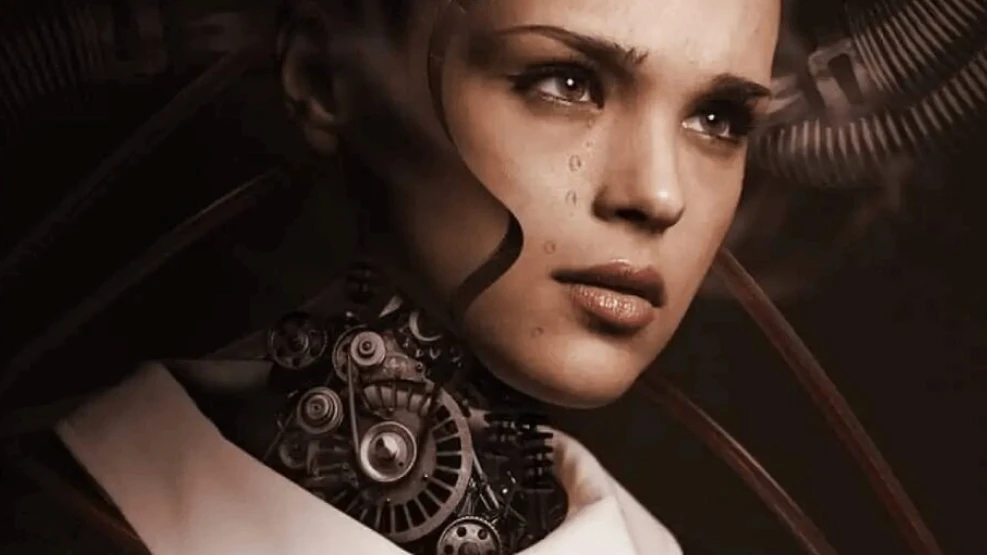
If you enjoy watching science fiction movies or series, you have certainly come across scenes that portray artificial intelligence as robots frighteningly similar to human beings. Those machines, capable of acting on behalf of good and evil with such dexterity, do not seem very friendly trying to take over the world. But rest assured: the current evolution of this technology is not as scary as it may seem; on the contrary, it is bringing enormous benefits to various sectors of society.
Speak with one of our specialists and discover how Pix Force can transform your business
Concept
The concept of artificial intelligence (AI) relates to the ability of machines to think like human beings, being able to learn, reason, perceive, and decide in an intelligent manner. As a field of computer science, AI learns through the information it receives, and as we "feed" the machine with a large amount of data (which we call Big Data), the smarter it becomes, acquiring skills in planning, speech recognition, and problem-solving. The learning of machines through our interactions and data is known as Machine Learning. Artificial intelligence is the greatest technological evolution in the computer science field due to its ability to connect various areas of our lives, facilitating and predicting our needs.
History
Artificial intelligence began to be studied, in fact, in the 1950s, due to the "behaviorist" psychological current. The name of this current comes from English, "behavior", which means "comportamento" in Portuguese. Behaviorism leads to a thesis about the human learning system, related to cognitive maps – stimulus-stimulus interactions – generated in brain mechanisms. Thus, for each group of stimuli, the individual produces a different and, to some extent, predictable behavior. In 1956, John McCarthy, a university professor, coined the term Artificial Intelligence to describe a world in which machines would have the ability to solve problems that would be reserved for humans. Early AI research in the 1950s paved the way for the automation and formal reasoning we see today in computers, including decision support systems and smart search systems, which can be designed to complement and augment human abilities.
Applications
Artificial Intelligence is present in practically all sectors we use, whether implicitly or quite evidently. The smartphone itself, used daily by most people, has AI applications: through voice recognition, it is possible to ask the device to do a search or even make a call – tasks performed by virtual assistants, such as Siri (Apple) and Google Assistant. In healthcare, image classification and object recognition can be used to identify cancer in MRI scans with the same accuracy as highly trained radiologists. In retail, AI provides virtual shopping capabilities that offer personalized recommendations for the consumer profile. The same occurs in video and audio streaming services, as the more you watch and listen, the more the platform knows your taste, being able, therefore, to make recommendations based on the data your usage provides. Something that was seen as almost impossible in a not-so-distant past is already in the testing phase today: we are talking about autonomous cars, capable of recognizing objects at a certain distance, avoiding collision accidents. In the agricultural, forestry, and energy sectors, artificial intelligence is also very present, and its use is a fundamental factor. Pix Force develops specialized products for these areas and, thanks to this applied technology, it is possible to identify anomalies in plantations – thereby preventing major crop losses –, automate tree counting – which would take much more time manually – and recognize overheating points in transmission towers, preventing accidents. Our AI-based solutions bring great speed and precision to companies, facilitating correct decision-making and, consequently, helping to avoid risks.
Future
In 2014, physicist Stephen Hawking stated that "the development of full artificial intelligence could spell the end of the human race." Hawking made this warning when answering a question about advances in the technology he himself uses to communicate, which involves a basic form of artificial intelligence. He explained that the primitive forms of artificial intelligence developed to date have proven to be quite useful to society, but stressed that he fears the possible consequences of creating machines with intelligence equivalent or superior to humans. In contrast, Rollo Carpenter, an expert in artificial intelligence, has a more positive view of its advances: "I believe we will remain in charge of technology for a reasonable period of time, and its potential to solve many of the global problems will be realized." There is no way to be sure what humanity will be like many years from now, but many of the scenarios and inventions we used to see in futuristic films are already present in our daily lives, and this only tends to continue. The world lacks many advances, whether in medicine – in the search for the eradication of diseases, in industries – eliminating high-risk activities for workers, or in fields – with a more effective quality analysis of food. The needs are many and, little by little, they are arriving and revolutionizing society. Studies regarding the possibilities of Artificial Intelligence applications are in full swing in various parts of the world, and it is a fact that people's lives are being made easier due to so many innovations. Regardless of what the coming years will be like, human beings will have new helpers in all sectors of their lives.

Fabio Caraça
Fábio Caraça is the Chief Growth Officer at Pix Force. He leads Pix Force's transformation into a scalable SaaS operation, combining strategic vision, culture, and high-impact execution.