News

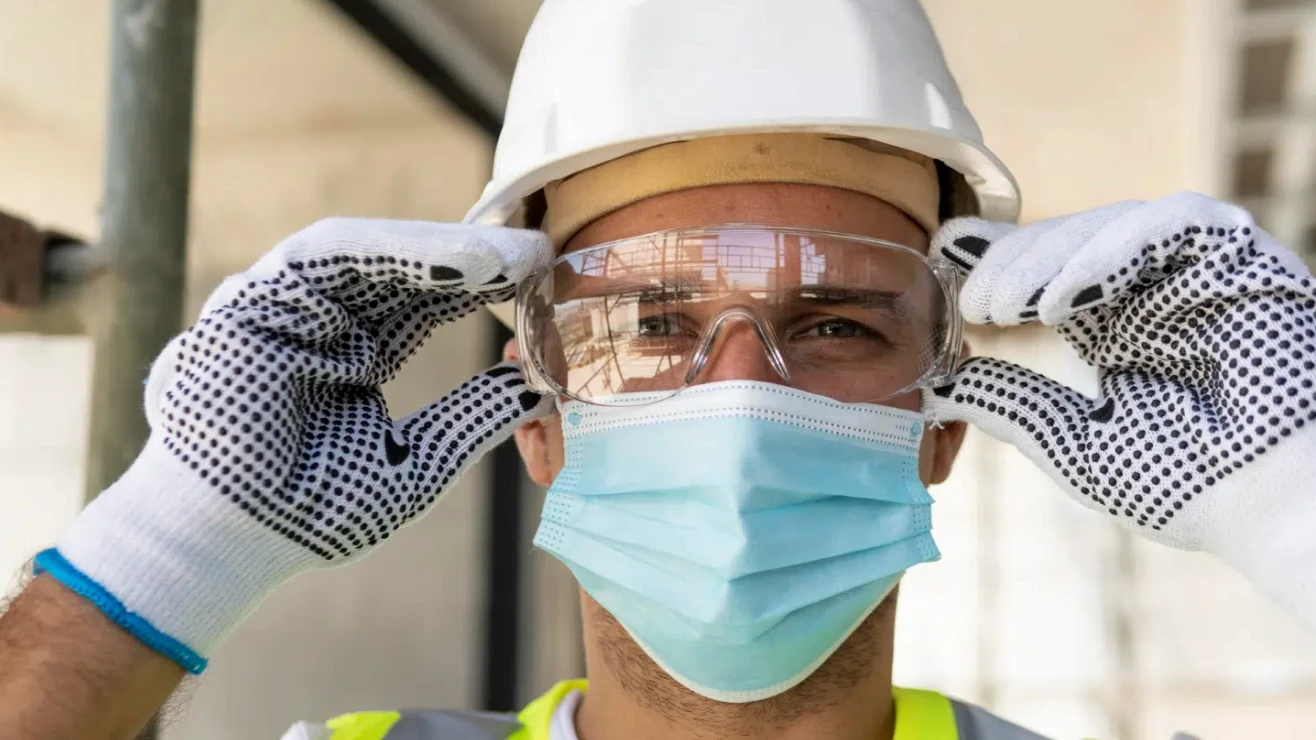
Learn how to manage PPE in practice: ensure compliance with NR-6, reduce accidents and costs, and use AI for real-time monitoring.
Speak with one of our specialists and discover how Pix Force can transform your business
Introduction: The occupational safety landscape today
We live in the era of Industry 5.0, where collaboration between humans and smart technologies defines who leads the market. However, amidst hyper-connected systems, a fundamental pillar remains: the physical integrity of the worker.
In this context, PPE (Personal Protective Equipment) management, when structured correctly, becomes a business intelligence strategy.
What has changed in modern industry?
Digital transformation has brought greater speed to processes, but also new complexities. Inspection is more rigorous, and regulatory standards (such as NR-6 and the new NR-1) demand a proactive posture.
Impact on Compliance and Profit
Efficient PPE management directly impacts the company's EBITDA. Fewer accidents mean:
• Reduction in workplace accidents.
• Fewer expenses with replacements and labor lawsuits.
• Increased productivity (a safe team produces with more confidence).
• Strengthening of the safety culture.
What is PPE Management and why does it fail?
PPE management is the set of processes aimed at planning, selecting, acquiring, distributing, training, monitoring, and sanitizing all the protective devices necessary for the operation.
Why, even with PPE available, do accidents continue to happen?
Often, the company invests thousands of dollars in the best equipment on the market, but fails in supervision. The safety technician cannot be everywhere at the same time. In a 5,000m² industrial plant, the "blind spot" is a constant reality.
What is PPE Management and why do traditional models reach their limits?
PPE management is the set of strategies to ensure that the employee is protected throughout their entire shift. However, even with good equipment and delivery processes, many companies face critical gaps.
Where traditional management usually meets its greatest challenges:
• The Problem of Blind Spots: No matter how attentive the safety team is, it is humanly impossible to monitor 100% of the area, 100% of the time. Manual management relies on periodic rounds, which creates risk windows where safety deviations can occur unnoticed.
• Sampling Inspection vs. Continuous Monitoring: In the conventional model, inspection is done through "snapshots" of specific moments. This does not guarantee that the PPE continues to be used correctly after the supervisor leaves. The challenge here is to transform intermittent surveillance into an uninterrupted standard of compliance.
• Subjectivity and Human Error: Fatigue or distraction can cause a supervisor to miss the absence of a glove or safety glasses in the middle of a complex operation. Perception failures are invisible risks that purely manual management cannot eliminate.
It is precisely to fill these gaps that Pix Safety was developed. It does not replace the safety technician; it acts as a layer of Visual Intelligence that expands the team's vision. Through Computer Vision, the platform analyzes camera images in real time to identify physical safety deviations, ensuring that the PPE management plan leaps from paper into practice, every single second.
The Step-by-Step Guide to Management Excellence
To transform your PPE management into a high-performance model, it is necessary to follow a structured method.
Risk Mapping
You don't buy a glove without knowing if the risk is chemical, thermal, or mechanical. The first step is the survey of the Risk Inventory (in accordance with the PGR - Risk Management Program). Each job role must have a clear and updated "PPE matrix."
Delivery Control and Handover Forms:
The PPE form is the document that protects the company in case of litigation. However, in 2026, signing on paper is a risk. Digitizing this process, with biometrics or electronic signatures, ensures that documentation is not lost and that expiration dates are alerted by the system.
Maintenance and Hygiene of PPE
In addition to delivery and documentary control, correct maintenance and hygiene are essential to ensure the effectiveness of PPE and prolong its useful life, reducing operational costs and risks.
Real-Time Monitoring and Compliance
It is of no use to invest in the best equipment if it remains stored in the locker or is used in a negligent manner. Continuous monitoring is the final link of management excellence. Through Pix Safety's computer vision, security cameras stop being just image recorders and start auditing the correct use of PPE in real-time. This ensures that compliance is not just a "photo" at the beginning of the shift, but a standard maintained 24 hours a day, identifying physical risks and ensuring that each employee is properly protected in all areas of the operation.
How to ensure the correct use of PPE by employees: the challenge of Safety Culture.
Providing the equipment is just the beginning of the journey. The true success of PPE management lies in the company's ability to ensure continuous use and the agility to identify safety deviations before they become incidents.
The Importance of Training (DSS)
The Daily Safety Dialogue (DSS) must be dynamic. Instead of reading standards, focus on case studies and risk perception. The goal is to create a culture where PPE is not seen as a "burden," but as a work tool, like the computer itself or a screwdriver.
The New Era of Supervision with AI
Even with the best training, human error is statistically inevitable. This is where technology solves the safety technician's "blind spot."
Imagine having a supervisor who can monitor dozens of areas simultaneously, 24 hours a day, 7 days a week, flawlessly. This is not science fiction; it is Computer Vision.
The Pix Safety Solution: > Pix Force developed Pix Safety, an artificial intelligence system that transforms ordinary security cameras into powerful sensors for occupational safety. The software identifies in real-time if an employee has entered a risk area, is wearing a helmet, gloves, vests, or any pre-configured PPE.
Upon detecting the absence of equipment, the system issues real-time alerts, notifying the manager even by cell phone. This transforms inspection, which was previously punitive and reactive, into a predictive and preventive process.
Strategic Advantages of AI in PPE Management
Implementing visual intelligence through Pix Safety is not just about automating a task; it is about raising the level of safety maturity in the company. See the direct benefits:
• Drastic Reduction of Accidents: By identifying the absence of PPE at the exact moment the risk occurs, AI allows for immediate intervention. This prevents human error from turning into an accident statistic, saving lives and preserving the team's integrity.
• Automated Inspection with Full Coverage: Unlike manual inspection, which is limited by shifts and "blind spots," computer vision offers 100% coverage of the monitored area. Inspection stops being sample-based and becomes omnipresent, ensuring safety in every square meter of the operation, 24 hours a day.
• Auditable Data for Preventive Actions: The system generates a robust and auditable compliance history. With this data in hand, the OHS manager stops "guessing" and starts "knowing" where the greatest risks are. This allows for planning surgical prevention actions, justifying investments and improvements based on facts, not assumptions.
• Adherence to Safety Culture and PPE Use: The presence of intelligent and constant monitoring creates a new standard of behavior. When the team realizes that safety is monitored with technical precision and impartiality, adherence to using PPE becomes an intrinsic habit of the company culture, raising everyone's level of responsibility.
Performance Indicators (KPIs) in PPE Management
If you don't measure it, you don't manage it. For data-driven PPE management, track these indicators:
KPI Description Goal Compliance Rate % of employees using PPE correctly in real-time. Close to 100%. Cost per Employee Total investment in PPE divided by the number of employees. Identify waste or underinvestment. Replacement Lead Time Time between request and delivery of new PPE. Reduce to prevent employees from working unprotected.
Conclusion: The future of safety is Data-Driven
Managing PPE is, above all, an non-negotiable commitment to people's integrity and company protection. However, in an industrial scenario that demands more and more agility, traditional methods of manual inspection become bottlenecks that prevent growth.
The modernization of processes, migrating from manual and reactive inspections to the use of Artificial Intelligence, is the path for those seeking real efficiency. By adopting technologies like Pix Safety, the company not only eliminates human error and supervisory blind spots but also frees up its safety teams to act more strategically and less bureaucratically. The future of occupational safety is not just about complying with regulations; it is about building smart processes that protect the team today, allowing the company to grow solidly and safely tomorrow.
Want to modernize your PPE management and eliminate blind spots in your operation?
Technology can be your greatest ally in preventing accidents. If you want to eliminate blind spots in your operation and ensure 100% compliance in the use of PPE through Artificial Intelligence, you need to know our solutions.
Speak with an expert and discover how Pix Safety ensures real-time compliance with AI.
This article was written by the Pix Force team, a leader in computer vision for industrial safety and productivity.
Did you like this content? Leave your comment or share it with your OHS team!

Valéria Lourenço
Fábio Caraça is the Chief Growth Officer at Pix Force. He leads Pix Force's transformation into a scalable SaaS operation, combining strategic vision, culture, and high-impact execution.