News
Projects involving Computer Vision can be applied to solve pain points in different segments. Starting from the identification of the presented problem to the testing phase, the development of a system must go through some fundamental steps until the final solution is ready for use. Image: Computer vision system: how is it created?
Known as the technology of machines that see, Computer Vision (CV) is capable of offering a wide range of possibilities, especially when it comes to increasing agility and efficiency in industry. Disruptive technologies are increasingly accessible, especially those related to image capture and processing, making the implementation of Industry 4.0 a tangible reality. Understand here what Computer Vision is and how it works. According to the American consultancy Markets and Markets, in 2018, $11.9 billion was generated in the global market for image processing systems. By 2023, the financial value is expected to reach $17.3 billion, proving the trend in innovation. Basically, the work with images performed by a CV system enables the identification of real-world objects, but in a way that data capture is elevated to a level never before imagined. With increasingly precise sensors and advances in the solution development process, it is possible to capture and process images to perform tasks such as product counting, quality control, and inspections.
Speak with one of our specialists and discover how Pix Force can transform your business
How can a Computer Vision system be applied?
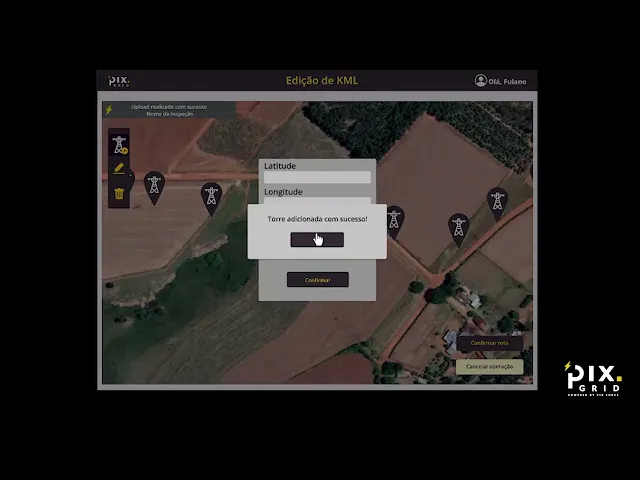
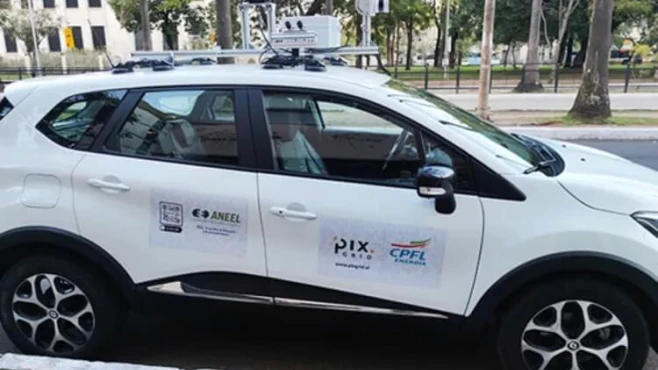
One of the examples of the technology's application is in the monitoring of transmission lines carried out by drones, aircraft equipped with sensors that capture aerial images. The technology developed by Pix Grid, Pix Force's vertical in the electricity sector, allows images to be processed and transformed into valuable data for the teams responsible for maintaining the towers. Learn more about the applications and how Pix Grid works here. In partnership with CPFL, the project increases safety and standardization of operations, featuring a platform that automates drone flights. The solution can also be applied to distribution lines located in urban areas, with the help of cameras and sensors attached to cars. [caption id=”attachment_3216” align=”aligncenter” width=”640”] Image: Computer vision system: how is it created?
Car used by Pix Grid in a project with CPFL.[/caption] Another example is the identification of the use of Personal Protective Equipment (PPE), as can be seen in the video below, by employees working in hazardous areas. The project carried out through CV was developed by Pix Force to ensure the presence of the equipment, as well as the possibility of detecting suspicious or improper objects. https://www.facebook.com/watch/?v=545932636433462 There are multiple possibilities for applying the technology in the market. Major players have increased profits by incorporating solutions developed by experts in disruptive technologies. However, the process of building the projects generates numerous doubts, making it necessary to clarify what the main stages involved are.
But after all, how is a Computer Vision system created?
First, we need to understand that the development of the solution must go through certain stages, even though some of them may occur in parallel. The time for each stage also varies according to each project, taking into account the level of complexity and novelty of the technology developed. Regardless of the segment, the first step will be to understand the difficulties faced by the company seeking a way to increase its competitiveness through technology. To do this, information about the presented problem will be collected, based on the need for a solution that is viable for the company, including from a financial standpoint. In the case of tasks performed by workers, it is necessary to map what failures the use of labor has generated, knowing that the solution will not always come through the simple automated replication of human methodology. A new computational method to solve the problem may be obtained, starting the planning stage of the solution.
Starting the solution architecture
One of the points that must be analyzed is precisely linked to the system's interaction with human labor. It is necessary to evaluate whether the solution will be fully autonomous, if it will require supervision, or if it will complement the workers' activities. After clarifying these and other points, the team can move on to the solution architecture phase, where the choice of the most suitable hardware system will also be evaluated. This is where the choice of sensors and cameras that will be used to capture the images comes in, which can vary considerably depending on the challenge ahead. Fixed, mobile, handheld cameras or drones are possibilities that can be used depending on the environment in which they will be deployed and the goals of the solution. In this stage, the need to acquire the devices is evaluated, or if it is possible to use cameras that are already available. In some cases, it is feasible to leverage images already taken by the company, or even mobile phones. In others, it is necessary to invest a bit more in the equipment, depending on the image capture requirements. There is also the possibility of working with a kit of devices (cameras and sensors) that can operate together, bringing flexibility to solving the problem. Each case must be evaluated, keeping in mind that the costs of the solutions may vary depending on the device to be used. You can find details about the different types of cameras with application examples here .
Development and testing
After a few points are clarified, we move on to the development stage, carried out by professionals who will work on tasks related to programming and the database that will be used to store the information. Next, the data processing method based on signals coming from the environment and captured by the cameras will be worked on. From here we reach the final phase of development, linked to the step of interpreting the results. During the solution development process, different professional profiles are involved, including a team of programmers, specialists in Computational Intelligence, Machine Learning, and Deep Learning. The time that the development stage demands may vary according to the complexity of the project. Understand more about Machine Learning here . Another factor that will impact the development stage is linked to the novelty of the solution. Projects that rely on technologies already applied in other areas usually require a shorter timeframe to be ready. On the other hand, unprecedented solutions require more dedication in this phase; after all, professionals need to create something completely new. With the solution orchestrated, we move on to the testing and validation phase of the structure. It is necessary to verify if the solution is applicable and scalable, that is, if it can be replicated in that business model. Bearing in mind that the first tests do not need to wait for the complete conclusion of the system, and can be started when parts of the solution are already operational.
Why invest in new CV projects?
We already know the basic steps for developing a system, including its primary objective: solving different market pain points. However, it is necessary to highlight some reasons to invest in the development of a new project, starting with financial resource savings. A new project will only make sense if it brings advantages to the industry. In addition to reducing the chance of errors and employing more agility and efficiency, new CV systems are capable of reducing financial waste, especially when linked to predictive maintenance. Regardless of the objectives, results must be visible over time, expanding the competitive capacity of businesses. Technology must be allied with the work developed by managers, facilitating processes and generating increased production. Want to keep learning? See below how Computer Vision can transform industries.

Fabio Caraça
Fábio Caraça is the Chief Growth Officer at Pix Force. He leads Pix Force's transformation into a scalable SaaS operation, combining strategic vision, culture, and high-impact execution.