News
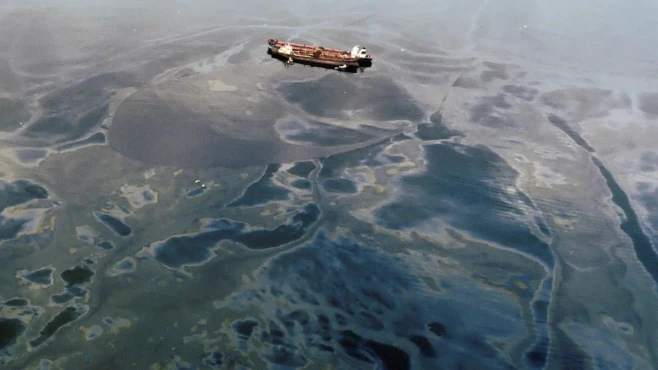
(Photo credit: RGB Ventures / SuperStock / Alamy Stock Photo)
Speak with one of our specialists and discover how Pix Force can transform your business
Oil spill: a real problem
Oil spills are a recurring problem with severe consequences in marine environments, resulting in massive animal mortality in the affected regions. Generally originating from ships and extraction platforms, the spills expand their region due to ocean currents and wave movement, potentially reaching hundreds of kilometers in length. In this context, identifying spills in their initial stage is an extremely important factor, both to mitigate environmental damage and to reduce the financial losses caused by the incident. Computer vision techniques, such as deep learning networks, can be applied to the task of identifying and delimiting oil slicks in early stages with high reliability. For this purpose, the developed model consisted of obtaining thermal images of a liquid surface and delimiting the region containing the spilled oil. Due to the difficulty of obtaining images from a real scenario (environmental control and high operating costs at sea), a controlled environment was designed for image acquisition.
How does the model work?
The designed environment is composed of: • A tank with dimensions 10m X 6.5m with an observable area of 5.1m X 3m from the center of the tank.
• A FLIR Vue Pro R thermal camera, connected to the TeAx Thermal Capture Grabber OEM capture module, positioned at the edge of the tank with an inclination of 35º.
Citation: For this experiment, the volume of oil dispersed was 200mL.
Based on the acquisition of the images, the U-NET network is used to delimit the region containing the dispersed oil. U-NET is an unsupervised network suitable for the task of image segmentation, and, through its hierarchical structure, it is possible to identify which pixels of an image from this experiment correspond to the oil region or the water region. Although it is a network widely applied to this type of task, there are no reports in the literature of its applicability in the scenario of oil spill segmentation. During network training, 141 images were used for 113 epochs. To validate the efficiency of the proposed model, 50 test images were used. All images had their ground truth performed manually.
Results
The metrics used were Accuracy, Precision, Recall, and F1-Score. According to the network's output and the applied metrics, the model's performance resulted in 0.85 accuracy, 1.0 precision, 0.85 recall, and approximately 0.92 for F1-Score, with the range of values contained in [0,1]. Based on these results, it is observable that the model performs with high performance, and the chosen metrics are appropriate for segmentation tasks. Additionally, since this is a deep learning method, the number of epochs and the size of the training set were sufficient to provide convergence to the network, characterizing its ability to generalize from the training set to unseen data (testing). As a possible expansion of this methodology and confirmation of these results, we can mention the possibility of modifying the oil used to simulate the spill, adding oils of different densities and tones, as well as altering the positioning of the cameras for a greater generalization of the developed model. Article by Pix Force technicians: Rodrigo Johann, Társio Onofrio Cardoso da Silva, Matheus de Oliveira Araújo, Caio Cesar Teodoro Mendes, Luis Felipe Zeni, and Bruno Vernochi da Conceição. Project developed by Pix Force.

Fabio Caraça
Fábio Caraça is the Chief Growth Officer at Pix Force. He leads Pix Force's transformation into a scalable SaaS operation, combining strategic vision, culture, and high-impact execution.