News

What the experts have to say and some strategies for your legal security
At this point in the year, we are all more than familiar with the new coronavirus and COVID-19, the disease caused by the virus. Although this is a completely new disease and many studies about its symptoms, treatments, medications, vaccines, origins, health consequences, and impacts on the world are still underway, we can already make some predictions and determinations about it. At first, COVID-19 cannot be considered a typically occupational disease, but it may become one, some experts believe.
Speak with one of our specialists and discover how Pix Force can transform your business
Legal aspect of occupational disease
First, we need to define what an occupational disease is. Law 8,213/91 equates occupational disease to a workplace accident for legal purposes. An occupational disease is defined as one produced or triggered by the performance of work, related to a specific activity, or acquired/triggered due to specific conditions under which the work is performed and/or to which it directly relates. In simpler terms, an occupational disease is one that was acquired or triggered by or within the work environment, or even by the way of working itself. Since COVID-19 is a disease that can be contracted practically anywhere in the presence of contaminated people, animals, objects, or surfaces, it is difficult to accurately determine the source of contamination. Thus, it is not possible to determine that this is an occupational disease, due to the impossibility of asserting that the virus was contracted in the workplace. Despite this, the STF (Supreme Federal Court) stated that, in the event of significant exposure of the employee and subsequent contraction of the virus, the company can be held liable. This decision is based on the theory of created risk, supported by the Federal Constitution and expressly provided for in the Civil Code. Therefore, there is an obligation to repair damages, regardless of fault, in cases where the employee's activity implies risk to the rights of others. The decision also prohibits any legislative act that allows for non-compliance with hygiene, health, and safety standards in the work environment. In general, in the absence of an express prohibition provided for in a Normative or State Act, the company may be held liable if it requires employees belonging to the COVID-19 risk group to remain active, especially if they contract the disease, with aggravating factors in case of severe symptoms and damage to health.
Legal security of companies
Even companies in the healthcare sector fall within this scope of liability, including in the case of sick employees who do not belong to the risk group, because the risk is directly related to the work activity. In the event that the employee dies due to complications from the disease, the company is obliged to compensate the family. It is known that COVID-19 can cause permanent damage in some patients. Therefore, in the case of permanent disability, the company will also be obliged to compensate the employee. It is emphasized that the employee with the disease does not have job security, even if contamination by the company is proven. The employee must only be away for a period of 14 days, making it impossible to receive the sickness benefit. For this reason, in case of leave for recovery, the company must consider it an excused absence under medical certificate and maintain the employee's payment during the period.
Legal recommendations
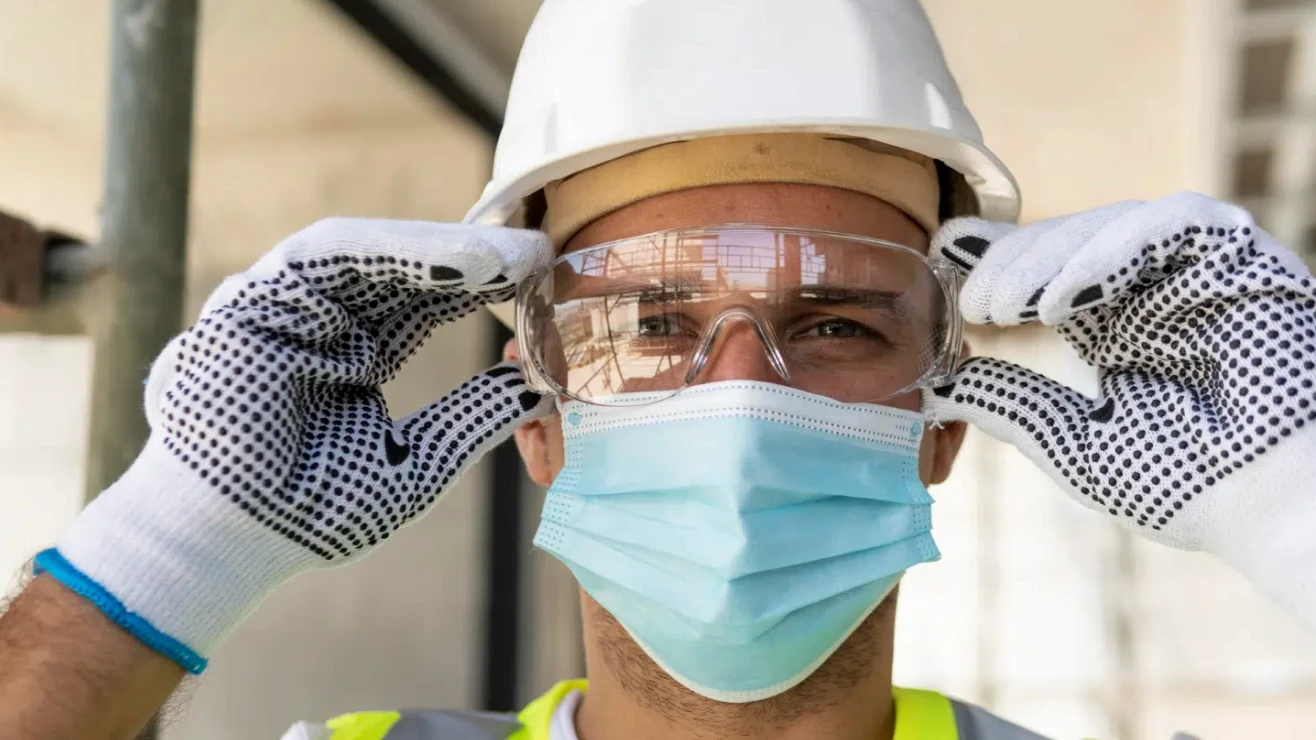
As already mentioned, COVID-19 is still an unknown and new disease in society, which is why there is no consolidated case law yet. Therefore, it is not possible to state with certainty that COVID-19 is an occupational disease. To reduce the risk of lawsuits in the Labor Court, it is recommended that companies adopt and follow all recommended precautionary measures. Among them, the provision of 70% alcohol gel, use of masks or faceshields, avoiding crowds, and temperature measurement stand out. Citation: *Text written based on an interview with Ozório Vicente Netto (OAB/ES nº 19.873), lawyer and Master of Laws, partner at Vinhas Menezes Netto Advogados.
Fabio Caraça
Fábio Caraça is the Chief Growth Officer at Pix Force. He leads Pix Force's transformation into a scalable SaaS operation, combining strategic vision, culture, and high-impact execution.