News
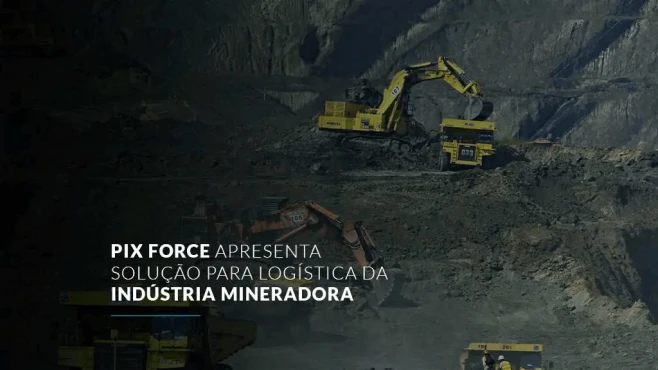
Is it possible to solve the logistics problems of the mining industry? Yes, that is what you will see in this article. The technology developed by Pix Force, in partnership with Eneva, is capable of ensuring greater agility, practicality, and safety in the inspection of conveyor belts, addressing the problems presented by the mining sector. Drones equipped with infrared and RGB sensors fly over the entire length of the belts responsible for transporting ore and other inputs, indicating the individual temperatures and the georeferenced location of each roller. Through Artificial Intelligence (AI) applied to computer vision, the technology transforms the images captured by the aircraft into reports that will be evaluated by technicians responsible for logistical operations, avoiding costs caused by unexpected downtime. In addition to expenses from problems in the logistics chain, the overheating of the rollers that make up the conveyor belts also represents risks to the labor force responsible for maintenance. After all, manual monitoring of the belts is considered an expensive, time-consuming, inefficient, and unfeasible process, as workers must face hostile environments, severe conditions, and risky routines to perform the inspection. Not to mention the risks related to fires generated by overheating that was not identified by manual monitoring. Considered one of the largest ore producers in the world, Brazil still faces problems related to the safety of its logistical operations. In 2020 alone, 235 million tons of raw material were shipped to China, a process that also depends on the efficiency of hundreds of kilometers of conveyor belts. The complexity of logistics demands constant evaluations of risks to the safety of the workers involved, who must perform time-consuming inspections that rely solely on human vision. In addition to contributing to the reduction of workplace accidents, the technology developed by Pix Force can be operated easily, as it is possible to monitor the drone without the need for piloting skills, avoiding costs with hiring specialized teams. In case of technical failure or obstacle, the aircraft automatically returns to the starting point. Another advantage of Deeptrack is linked to its ability to surpass the monitoring work carried out by sensors, which need to be inserted individually on each of the belt rollers, in addition to demanding a high number of workers for inspection. READ ALSO: • Computer Vision: A Complete Guide to answer your questions
• Inventory stock with artificial intelligence
Speak with one of our specialists and discover how Pix Force can transform your business
Data supply enables predictive maintenance
Predictive maintenance works to reduce expenses on repairs that could be avoided if the root of the problem were identified. Focusing on the anticipation of deficiencies in machinery and equipment, predictive maintenance is only possible thanks to the information that technologies like the one developed by Pix Force can provide. Faster and more precise inspections than human vision are capable of providing precious data for technical teams to carry out repairs. In the case of Deeptrack, the rapid processing of information collected by drones brings agility and efficiency to the maintenance team's performance, in addition to helping managers make more assertive decisions regarding the logistics chain. Maintenance expenses are already responsible for a large portion of operational costs in the mining industry. If unexpected shutdowns occur, the loss can be proportional to the time required to restore operations. The possibility of predicting more serious problems such as shutdowns and fires is directly related to the application of innovation in the sector, ensuring greater control over processes.
Historical record of conveyor belt performance ensures more assertiveness in decision-making
Historical reports on the performance of each roller are another advantage presented by Deeptrack. Information about the variation in equipment temperature over different inspections is generated, enabling the identification of sections of the conveyor belt that present problems more frequently. The team responsible for maintenance can also access the videos of the missions in their entirety, enabling access to information about the operation of the belts in different periods. By integrating computer vision into the mining industry, the solution directly addresses problems faced by the transport of raw materials and inputs. In 2017 alone, logistics expenses represented 26% of the segment's gross revenue, which demonstrates the need to incorporate disruptive technologies capable of offering cheaper and more efficient solutions to the sector.

Fabio Caraça
Fábio Caraça is the Chief Growth Officer at Pix Force. He leads Pix Force's transformation into a scalable SaaS operation, combining strategic vision, culture, and high-impact execution.