News
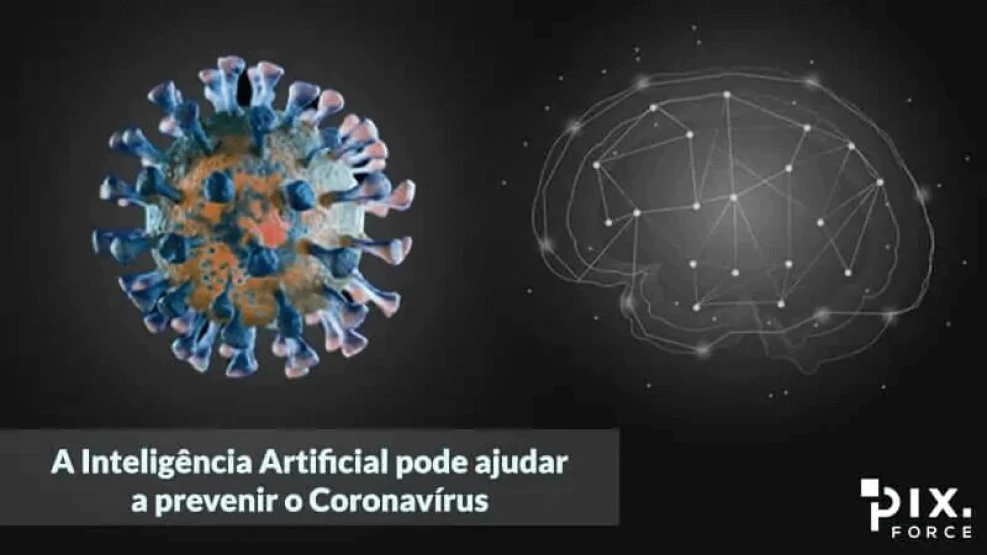
Interactive maps in real time, complex algorithms that can predict outbreaks and diagnostic systems… These are just a few examples of applications of Artificial Intelligence in healthcare to prevent diseases like the coronavirus and control its spread. The solutions include the use of AI to process large amounts of data coming from different countries of the world and in different languages. There is an enormous amount of online data and discussions usually do not come from governments and official channels, but rather from news, forums, blogs and social media. There is a need to sift through the information, classify it, filter through the noise, geocode the data and only then provide a broad view of emerging diseases. In view of this, many companies and organizations have put together tools to track the coronavirus. Combined, data management platforms and artificial intelligence methods can lead to a massive analysis of infectious diseases that can even become relevant supports for decision making. Still, this represents a challenge for scientists and developers, as there is no standardization for global data. READ ALSO: • What is process optimization?
• What is computer vision?
• Artificial intelligence in industry
Speak with one of our specialists and discover how Pix Force can transform your business
What is the relationship between artificial intelligence and health?
Nine days before the World Health Organization warned about the new coronavirus, a Toronto startup noticed the threat of COVID-19, the disease caused by the virus. BlueDot used data from hundreds of thousands of sources, such as public statements from health organizations, traditional media, health reports, and even airline information. The startup relied on its co-founder's experience as an epidemiologist and a physician treating SARS patients. Meanwhile, HealthMap, an AI technology developed at Harvard Medical School that tracks infectious diseases, also noticed the first signs of the coronavirus before it attracted global attention at the beginning of the outbreak in Wuhan. The system allows for early identification, but now the technology is being used to build a situational scenario of what is emerging by mining data sources and trying to construct a global map of cases. In this way, the data can be used to feed prediction models and impact different demographic tools.
What else is being done?
Other startups, such as WeBank in China, have taken AI even further into the situation. The application is to predict the subsequent recovery of the Chinese economy from the crisis caused by COVID-19. Technology and AI, in particular, can also be applied in responsive emergency services. Algorithms have been used to predict the spread of a specific disease, monitor patients, and manage departmental operations in the emergency room. Scientists around the world can use algorithms to classify and group information, scan the internet, and interpret languages associated with the diseases being monitored. Robots can also analyze images and perform medical tasks that human professionals could not or did not feel safe performing.
Challenges of Artificial Intelligence in Healthcare
In this era, there is much debate about innovations to develop new solutions. AI is one of the biggest bets to improve emergency medicine through its digitization power and information storage capacity. Despite all this, the use of AI in medicine and in medical alerts about the coronavirus is not without challenges. The biggest of them is to produce an attractive and reliable dataset about the virus and its spread, which is based on multiple datasets (which can have many varied metrics). There are different structures and taxonomies, different ways people use to refer to the disease, different languages, cultural context, terms that people use that can be applied to other things and contexts… In other words, there is a lot to filter and this task demands a significant amount of training.
How the future could be...
Most importantly: the key characteristics of AI in terms of epidemic prevention are speed and scale. AI can detect conditions instantly and in large quantities. For example, 1,000 systems checking 60 people per day, on average, result in 60,000 exams that need to be processed by professional teams. Currently, there is no human force capable of analyzing this entire volume of data with the necessary speed and efficiency. When it comes to detecting outbreaks like that of the coronavirus, which spreads easily and very quickly, machines can be trained to process all this amount of information in the same way a human expert would, but repeatedly and 24 hours a day, making the task scalable, agile, and efficient. Finally, Artificial Intelligence becomes a valuable helper to human intelligence in interpreting scenarios, assessing their relevance, and considering how to best apply decision-making. Furthermore, AI can be one of the foundations in identifying and creating vaccines and treatments for the coronavirus and COVID-19, respectively.
The importance of AI in preventing the coronavirus
AI has the ability to quickly search giant databases for existing drugs that can act against the coronavirus or develop a new drug in a matter of months. An example of this is the company Insilico Medicine, which specializes in the use of artificial intelligence in the field of pharmaceutical research and development. The company uses a system that identifies thousands of new molecules that could serve as potential remedies for the coronavirus in just 4 days. This type of research could prove of vital importance in the future, not only to prevent the coronavirus. Combined with intelligent triage systems, AI could be one of the primary elements to ensure that another type of virus does not have such a major impact on the global economy.
Current scenario
Currently, the disease caused by the virus has the potential to cut global economic growth by up to $1.1 trillion dollars. In addition to having already wiped out about $5 trillion dollars from global markets. Clearly, avoiding such financial destruction in the future is essential. And AI could prove indispensable in this aspect. Especially when analyzing the potential impact of pandemics in an increasingly populous and globalized world. In China, robots are being used in hospitals to relieve stress on medical staff. Ambulances in the city of Hangzhou are assisted by an AI-based navigation system to help reach patients faster. Robots were also sent to a public square in Guangzhou to warn passersby who are not wearing masks. There are also indications that China is using drones to ensure residents are at home. This measure aims to help prevent the coronavirus from spreading further.

Fabio Caraça
Fábio Caraça is the Chief Growth Officer at Pix Force. He leads Pix Force's transformation into a scalable SaaS operation, combining strategic vision, culture, and high-impact execution.