News
Artificial intelligence and machine learning are part of today's cutting-edge technologies. In industries and the scientific field, these two phenomena produce vital advances in the way we use machines and smart tools in our favor. Pix Force is based on using the knowledge and applications of both in the solutions it provides to the market, specializing in computer vision products. But what is artificial intelligence? What is the meaning of machine learning? What is the difference between artificial intelligence and machine learning? Let's find out! READ ALSO: • Computer Vision: the Complete Guide!
• What is machine learning?
• Stock inventory through artificial intelligence
• 10 examples of Machine Learning you need to know
Speak with one of our specialists and discover how Pix Force can transform your business
How does artificial intelligence work?
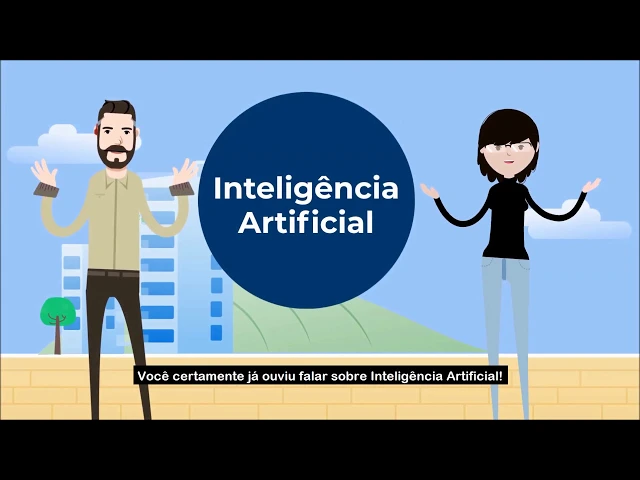
Artificial intelligence (A.I.), as the name suggests, does not originate from humans, but from machines. Although it replicates human operating models, the work is done by a computer or device — hence the term “artificial”. In short, A.I. is the technology that allows machines to learn from experiences and perform tasks that would normally be done by humans. Basically, A.I. systems perform intelligent searches and research, interpreting texts, images, and other factors to identify patterns in complex data. After identification, the A.I. can act according to its conclusions. In this case, A.I. programming focuses on three cognitive aspects: learning, reasoning, and self-correction. In the first, programming focuses on gathering data and creating rules to turn it into useful information. These rules are the algorithms, and they give systems instructions to perform a specific task. In the reasoning process, the programming is concerned with selecting the best algorithm to achieve the proposed goal. Finally, in self-correction, the programming aims to regularly adjust the algorithms, ensuring they provide the most reliable results possible. In the video below produced by SENAI, you will see in a very didactic way how A.I. works: https://youtu.be/xB4lT7ju8cA?si=GNM6xtZeR-XKfQOg
What are the sectors and segments of Artificial Intelligence?
There are several processes included in artificial intelligence, such as machine learning and computer vision, both of which are highly present in Pix Force's products. The company's goal is precisely to apply these technologies to solve industry problems, bringing new solutions and contributing to greater efficiency in the sector. Thus, computer vision is a technique that makes use of deep learning (a subset of machine learning that uses artificial neural networks to process data) along with pattern recognition to interpret the content of an image. This can include charts, tables, images, as well as text and videos. Computer vision is highly present today, both in industry and in research. Remembering that computer vision is the application of Artificial Intelligence, which uses machine vision to increase the efficiency of the human eye.
How does machine learning work?
Machine learning (M.L.) is part of AI processes. In it, computer systems can learn automatically and improve according to experience, without necessarily being programmed. M.L. focuses on developing algorithms that can analyze data and make predictions. The technique builds predictable data models that can provide useful answers for making important decisions. It uses statistical concepts, as well as mathematical approaches, to work with complex data. There are different approaches to machine learning, the two main ones being supervised and unsupervised. In the former, the computer has input information and the information of the desired responses; the goal is to learn the pattern that correlates the two. In the latter, there is no prior information of any kind, and the algorithm discovers for itself the structure present in the processed data.
What is the difference between artificial intelligence and machine learning?
Now that we have reached this point in the article, it is easier to understand the difference between A.I. and M.L. In this case, Artificial Intelligence is an "umbrella" and comprehensive term that includes various aspects and techniques. Machine learning is one of them. In other words, machine learning is within the concept of artificial intelligence. In summary, A.I. is a concept that refers to the creation of intelligent machines capable of simulating human capabilities and behaviors, while M.L. is an application of A.I. that allows machines to learn from data without explicit prior programming. Reinforcing this, machine learning is inside artificial intelligence because it is a byproduct of it. The goal of A.I. is to create intelligent computer systems that can solve complex problems. Meanwhile, the goal of M.L. is to allow machines to learn from data in order to provide accurate responses. In A.I., systems can vary for different activities to be performed as a human would, while in M.L., the data provided targets specific tasks, and machines are trained for designated tasks. In short, A.I. is broad, and machine learning is more specific.
Examples of artificial intelligence
Artificial intelligence can be used in many devices. Let's look at the examples: • Chatbots
• Electronic payments
• Search and recommendation algorithms
• Social media
• Online advertising network
• Text editors
• Facial recognition systems
• Smart devices,
• E-commerce,
• Streaming services
• Space exploration.
There are also levels of A.I.: weak A.I., medium A.I., and strong A.I. The first includes most of the A.I. systems we know today, and the second refers to more robust systems, such as Apple's Siri, Amazon's Alexa, as well as autonomous vehicles. However, we have not yet achieved strong A.I. Theoretically, it would be a form of artificial intelligence where the machine would have an intelligence equivalent to that of humans. In other words, it would have self-awareness, and the ability to solve problems, learn, and plan for the future. One of its components would be Artificial Super Intelligence, which would surpass the intelligence and ability of the human brain.
Examples of machine learning
As previously mentioned, M.L. allows machines to learn from received data, without necessarily being programmed. It can, for example, make predictions using statistical algorithms and perform tasks beyond what was proposed in its initial programming. Machine learning has enabled many advances in computer science, and we can see it present in phenomena such as image recognition and text translation, for example. By the way, Pix Counter, a Pix Force product, also uses image recognition through machine learning, counting items through an image taken by a smartphone or camera. If you want to know more details, access here and understand! In addition to Pix Counter, there are countless other examples of M.L., such as: • Voice recognition
• Alerts in Google Maps
• Chatbots
• Information extraction
• Advertisement recommendations on social networks and on Google
• Autonomous cars
• Video surveillance devices
• Spam filtering in emails
• Language apps
• Virtual assistants and etc.
Conclusion on Artificial Intelligence and Machine Learning
Both AI and ML are extremely important in the way we handle the problems of the modern world. And to promote adequate solutions, Pix Force seeks to offer the very best in the use of devices that utilize artificial intelligence and machine learning. We recognize that companies can achieve greater efficiency when they employ artificial intelligence and machine learning technologies in their internal demands. Therefore, Pix Force has numerous solutions to contribute to your business and bring computer vision to help you solve problems. Get in touch through this form and talk to us! Get to know Pix Force!

Fabio Caraça
Fábio Caraça is the Chief Growth Officer at Pix Force. He leads Pix Force's transformation into a scalable SaaS operation, combining strategic vision, culture, and high-impact execution.