News
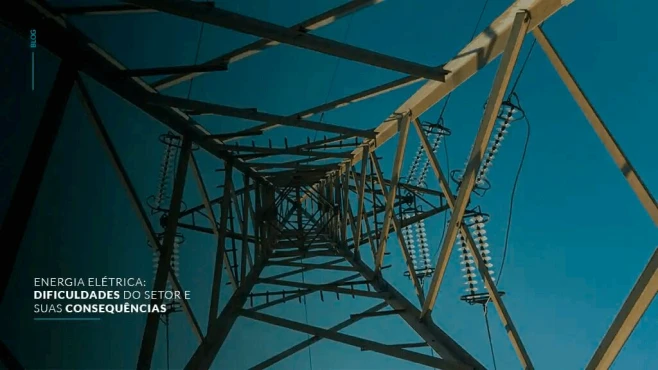
According to the National Association of Energy Consumers, the number of blackouts in Brazil has been increasing with greater frequency each year since the last decade, causing enormous material, economic, and social losses for the country. The lack of electricity is a terrible problem for the Brazilian economy. In 2020 alone, there were 37 major power outages, which highlights the great difficulties the sector currently faces in predicting unforeseen events, which have indeed become increasingly common. READ ALSO: • Learn all about computer vision
• Understand inventory stock, here!
Speak with one of our specialists and discover how Pix Force can transform your business
Problems caused by power outages or blackouts
One of the most recent and devastating examples of this type of problem was the November 2020 blackout in the state of Amapá, in which an explosion followed by a fire compromised three transformers at the state's most important substation, located in the North Zone of Macapá, leaving 14 cities and 90% of the state's population in the dark for several days. The crisis was one of the worst experienced in the country since the 1999 blackout. Due to the lack of electricity, healthcare professionals in several hospitals had to decide between turning on the hemodialysis machines required for patients with kidney disease and the ventilators in the Intensive Care Units (ICU) treating COVID-19 victims. This power failure also affected the state's supply system, causing a shortage of tap water, mineral water, and ice. The power outage consequently impacted internet and telephone services, causing most of them to stop working. ATMs and card machines, which require electrical power, also stopped operating, making it impossible for many people to make purchases. Pumps at gas stations collapsed due to the lack of power during the days of instability. The chaos in the region led to numerous losses of economic resources, as well as at least a dozen deaths directly or indirectly related to the blackout. However, energy supply crises like the one in Amapá not only cause great losses to the communities that suffer their consequences, but also deeply affect the companies responsible for the damage caused, which are heavily penalized by regulatory bodies. For example, in 2021, the National Electric Energy Agency (ANEEL), which regulates the sector in Brazil, fined the concessionaire LMTE (Linhas de Macapá Transmissora de Energia) R$ 3.6 million for its responsibility in the blackout, arguing that there was "a lack of redundancy, a lack of sector planning, and a lack of a special protection system (SEP)" on the part of the company. According to the Poder 360 website, the fine was the largest ever applied by the agency in percentage terms, representing 3.54% of LMTE's revenue the previous year.
Power outage: the reasons
The most common causes of power outages or blackouts are usually related to: • explosions of transformers responsible for the connection between the generation and transmission of a large part of the electrical energy of a region;
• transmission line failures;
• insufficient maintenance and replacement of outdated equipment;
• lack of network protection systems;
• lack of preventive pruning in higher-risk regions.
Brazil has many centralized power supply systems. In complex systems, the failure of one component induces others to fail shortly after. When a transmission line is interrupted, for example, parallel lines can suffer overload and automatically shut down to prevent permanent damage to the system. Many of these subsequent failures cause blackouts in small parts of the network, while others gain large proportions, causing larger-scale blackouts.
How to avoid the problem of power outages?
To avoid or reduce this type of incident, constant maintenance of the systems on which the energy supply depends is necessary, as well as the use of new technologies such as artificial intelligence and machine learning to detect and address, in advance, the small problems that could jeopardize the proper functioning of distributors' equipment and power transmission lines. Are you interested in this subject? Access our website www.pixgrid.ai and learn how Pix Force's technology provides fast and effective solutions for the preventive inspection of problems in energy transmission systems.

Fabio Caraça
Fábio Caraça is the Chief Growth Officer at Pix Force. He leads Pix Force's transformation into a scalable SaaS operation, combining strategic vision, culture, and high-impact execution.