News
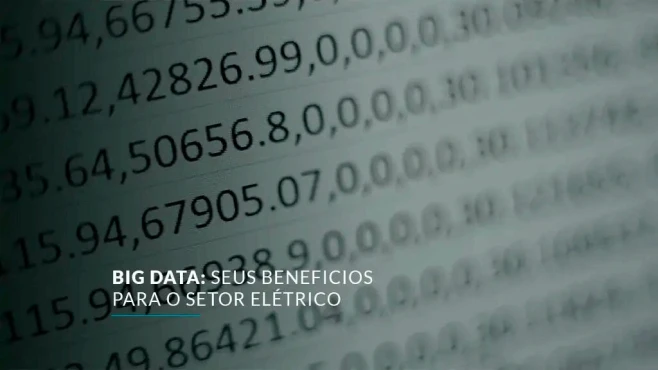
Do you want to know an example of big data and a specific sector where it is used? Or better yet, what is the meaning of big data? Basically, big data refers to datasets that can be processed and stored, all with speed, variety, and volume. One of the applications of big data is in the energy sector. Currently, energy use is massive worldwide. Every process is somehow powered and supported by the energy sector. From businesses and factories to homes and schools, every sector of our society today needs more energy than ever — and made available at affordable prices. In the past, supplying such demand would be an extremely complicated, if not impossible, task, but recent innovations in Big Data have made it a reality. Big Data is an important trend in modern companies, as data has become the most relevant asset for many businesses. The use of this innovative technology can be a key resource to rely on for making better business decisions, and its use in the electrical industry has increased exponentially in recent years. Companies in the energy sector apply smart technologies to their services, including sensors, machine learning technologies, energy planning, and network communication, among others. These produce large datasets on an ongoing basis that are collected over a period of time. And the larger the volume of data, the more complex it becomes to perform an accurate and fast analysis. In situations like this, the value that Big Data brings to accurate data analysis is evident. But this technology can be much broader, having interesting applications for various areas of the energy sector. [caption id=”attachment_3074” align=”alignnone” width=”612”] Big Data: benefits of use for the electricity sector[/caption]
Speak with one of our specialists and discover how Pix Force can transform your business
Example of big data and its role in the energy sector
Risk analysis is one of the most interesting applications of this technology, it is being used to solve complex commercial problems for strategic investment decision-making in the sector. Energy companies use advanced analytics to filter their data collected from thousands of sensors and use it to make well-informed investment decisions. This data helps assess market demand and provides all the necessary insights. Power generation companies use advanced analytics and modeling to forecast future prices and consequently change their operational model to meet challenges. When used in the cloud, Big Data enables information backup and prevents business data from being lost in the future. It offers power-generating companies an opportunity to understand the risk profiles of their portfolios and potential opportunities, resulting in more strategic decisions.
Greater efficiency in monitoring
Energy companies seek to predict market changes using real-time key indicators to respond quickly and mitigate problems. With artificial intelligence, it is possible to incorporate and evaluate a large volume of information for energy companies. This allows them to prepare more effective commercial strategies. In this context, Big Data improves the monitoring and maintenance of equipment in the sector, minimizing production hours. When energy companies invest more in data to monitor their entire operation, they ensure that no future disaster or system failure can cause irreparable damage. [caption id=”attachment_3076” align=”alignnone” width=”640”] Big Data improves equipment monitoring and maintenance[/caption] Data also improves machine efficiency. Sensors are being installed in equipment to monitor its performance. All collected data is then analyzed and used for a collaborative business purpose. Better monitoring and supervision through data can allow energy producers to be more proactive. Big Data technology has proven to be an essential catalyst for achieving the best business performance in the energy sector and is already paving the way for the industry's future. We at Pix Grid use this innovative technology to develop smart solutions for the energy sector. Visit www.pixgrid.ai and learn more!

Fabio Caraça
Fábio Caraça is the Chief Growth Officer at Pix Force. He leads Pix Force's transformation into a scalable SaaS operation, combining strategic vision, culture, and high-impact execution.