News
When we think of technology revolutionizing businesses, we always look toward the most common areas of the market. But did you know that the oil and gas industry has also been benefiting from the innovations that emerge every day? This is the subject of this article. We present some relevant aspects of the sector and which technologies are being most useful for its development. Enjoy your reading!
Speak with one of our specialists and discover how Pix Force can transform your business
Technology in today's market
To stand out in today's market, differentiation is required. And currently, the most evident way to stand out is to seek innovation and technology to be allies of your business. The market works, today, with a concept we call "Industry 4.0", which brings a series of elements that dictate how businesses operate. Among them, we can highlight some that we have already talked about here on the Pix blog, such as process automation and artificial intelligence. But you must be wondering, how can these innovative technologies apply to the oil and gas industry? To do this, we need to look a little deeper into the sector. The oil and gas industry is known as one of the most open to investment in innovations. Over the years, they sought various ways to optimize their operation and product exploration, removing much of the operational load, mechanizing activities and, consequently, increasing business profits.
The oil and gas industry 4.0
Also called the fourth industrial revolution, industry 4.0 has been driving significant changes worldwide. Production processes have been reviewed, optimized, and improved to deliver increasingly better products and services. And, of course, this change directly affects the oil and gas sector. According to 2019 data released by Wood Mackenzie, it is predicted that by this year - 2023 - at least $75 billion will be saved through the use of new technologies in oil extraction. With innovations emerging every year, keeping up with updates and knowing how to use them in the best way is what transforms the market. Among these new technologies that impact the oil and gas sector, we can highlight those listed below. Citation: Read more: Industry 4.0 in Brazil and the sector's new technologies
IoT - Internet of Things
IoT, or the Internet of Things, is no longer a major novelty and has been used by various segments in recent years. It is nothing more than devices that perform specific actions in an area and allow for data collection and space monitoring. They are connected to an integrated online system and can act independently.
Machine Learning
The concept of "machine learning" has been very common in new technologies. Based on certain patterns recognized in data, equipment and software are able to perform activities and even make decisions without the need for manual work.
Big Data
Big Data, basically, is what drives the two previous technologies, as it is the gathering of data on a large scale based on information analysis. These are readings that are humanly impossible to be done manually, as they act in the production of a huge database within the industrial system.
Artificial Intelligence
Also present in the previous examples, especially in machine learning, artificial intelligence (AI) is capable of simulating the human ability to reason and make decisions. Machines are programmed to perform tasks ranging from environmental monitoring to the production chain.
How do new technologies apply to the oil and gas industry?
Now that we have talked about some of the innovations present in the market, we need to understand how they can be used within the sector. In the petroleum industry, for example, artificial intelligence is already being used in software to automatically find faults and horizons in geological modeling and facies prediction. Although they still require human supervision, these AI models have already been showing positive results for the market. AIs can also be used for drilling operations, as they can provide more accurate data on the location and characterization of the subsurface. The Internet of Things, or IoT, has been useful in tasks including: • Preventive maintenance
• Remote monitoring of installations
• Process safety
• Failure detection
• Historical analysis of activities
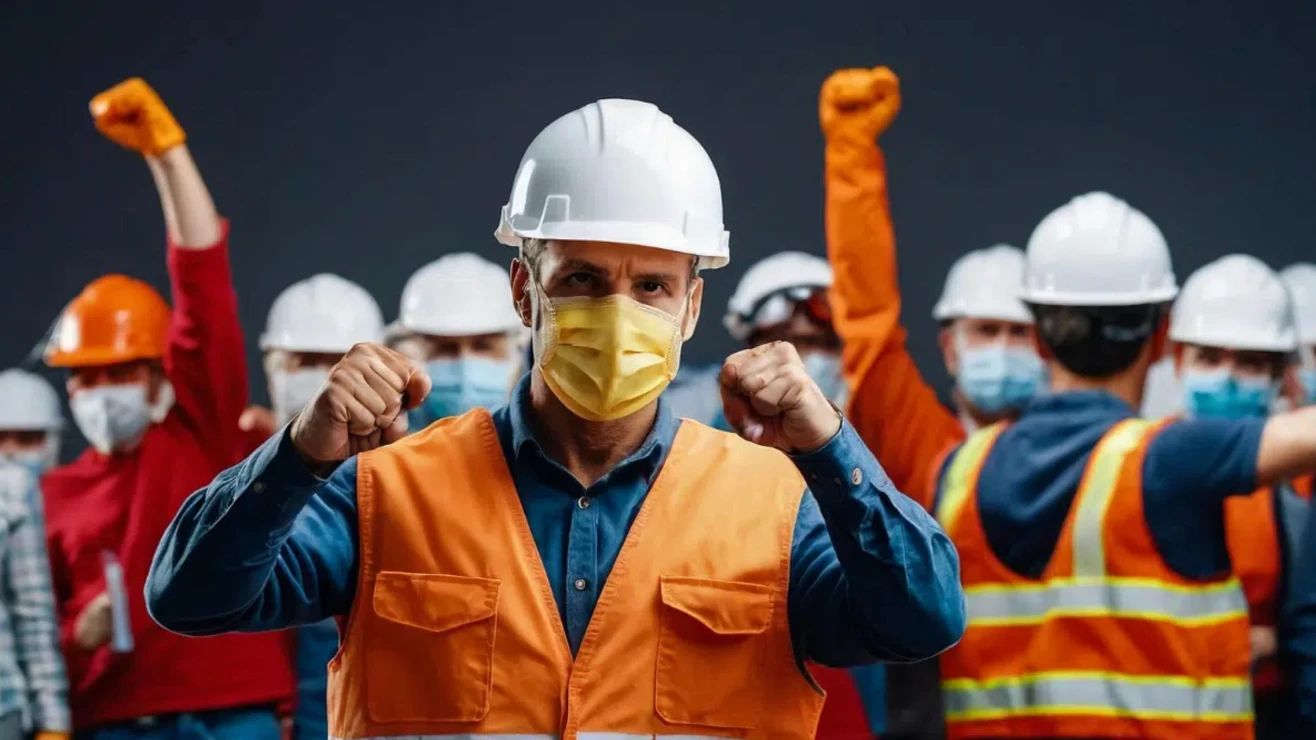
IoT applications can also be used on platforms to ensure worker safety. With this technology, it is possible to issue notifications about dangerous activities, improper use of PPE, intrusion into prohibited areas, among others. And there's more: IoT can be used in the automation of vehicles and equipment, reducing the human workforce, reallocating efforts, and cutting costs for simpler operations. Citation: Read more: IoT in the industry: See success stories that will inspire you
Finally, Big Data is what enables all these - and other - technologies to happen. As we mentioned earlier, it refers to the large volume of information generated and stored within an industry's system. For the oil and gas sector, a lot of historical information is relevant for good future performance. For example: • Reports and 3D seismic data
• Well drilling history
• Production monitoring
• Information about the region where activities will be carried out
This is information that is difficult to manipulate, read, and store within simple computing activities. Therefore, big data is very important to maintain everything needed to know for the proper functioning of the industry as a whole - and thus, feed machine learning, artificial intelligences, and IoTs.
And how can Pix help the sector?
We are focused on creating solutions that bring innovation to the most diverse markets. Therefore, our products are designed to create optimizations from big data, machine learning, and artificial intelligence, using these tools to grow with businesses. Pix Safety is a tool that uses AI to ensure your team's safety. It allows you to control access to restricted areas, the tools used by your employees, and even the correct use of PPE. Meanwhile, with Pix Alerta, your industry can monitor large areas easily and quickly. Based on machine learning algorithms, our product automatically analyzes satellite images and issues alerts whenever something happens, such as fires, deforestation, harvesting, intrusions, among others. Want to know more about Pix Force? Visit our website and speak to a salesperson.

Fabio Caraça
Fábio Caraça is the Chief Growth Officer at Pix Force. He leads Pix Force's transformation into a scalable SaaS operation, combining strategic vision, culture, and high-impact execution.