News
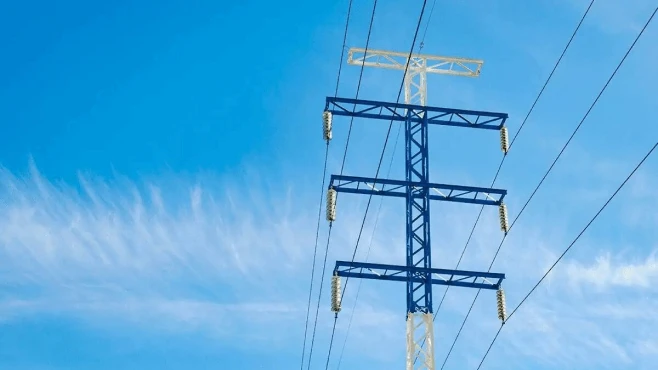
The use of drone technology in outage management and in the inspection and maintenance of power transmission lines or towers requires a comprehensive solution, typically driven by a holistic technology approach. This approach is known as Intelligent Asset Performance Management. It thus combines new asset management strategies, such as using innovative technology to enable efficient outage management, cheaper, safer, and faster inspection and maintenance methods, with optimized prediction of potential infrastructure failures. It comprises three key components essential for an end-to-end drone-based transmission line inspection.
1. Asset performance management
Asset management is a complex business field in which utilities often struggle to harvest data and transform it into operational insights. Asset Performance Management (APM) corresponds to an emerging field of technologies and strategies, which promises to cut costs and increase grid stability. As more and more devices, components, and units are connected to the Internet of Things (IoT), APM captures and analyzes component data to transform information into actionable insights. For utilities, this means gathering, processing, analyzing, and eventually acting proactively on grid component health information to improve operations.
2. Big data and artificial intelligence solutions
The ability to process, store, and analyze large amounts of data from a wide variety of information sources is critical for the implementation of asset performance management. Unlocking efficient data collection and analysis across multiple data sources requires a Big Data platform with artificial intelligence analysis capabilities. In short, this means a solution capable of handling voluminous and complex datasets, quickly recognizing thousands of potential objects and errors through the use of cloud architecture automatically (cloud solutions).
Speak with one of our specialists and discover how Pix Force can transform your business
3. Technology integration: communication, sensor and drone
Although sensor technology is being deployed at an increasing rate in utility infrastructure, many components lack the sensors or equipment needed to allow remote monitoring of power grid assets. This complete sensing process does not have an attractive ROI, since 24/7 monitoring does not always bring effective gains. Thus, periodic inspections with data analysis dilute the monitoring investment across multiple assets, bringing the investment to a promising level.
Pix Grid: the complete solution for inspection and monitoring of transmission towers
Pix Grid is a cutting-edge technology solution for optimizing power infrastructure operations. It features software optimized with artificial intelligence, smart sensors, autonomous flight, and different types of drones for various inspection and maintenance purposes from a web operations center. In addition, it also features five critical main components to leverage the opportunities inherent in power line inspections:
Unmanned Aerial Vehicles (UAVs) – Drones
The current inspection method relies on manned helicopter expeditions and is still quite manual, often carried out annually. The use of drones makes the work more routine and is considerably more cost-effective for companies. Pix Grid has a variety of different aerial vehicles for various types of operations, from a simple easement strip control to thermographic inspections of long sections of transmission lines.
Smart Sensors
Sensors are the backbone of the Internet of Things (IoT), being the hardware that monitors asset health, as it is what makes all measurements and data collection. Pix Grid raises the bar for market sensors by associating them with the use of artificial intelligence, with processing at the edge, the data is optimized, ensuring that what really matters will be stored.

Fabio Caraça
Fábio Caraça is the Chief Growth Officer at Pix Force. He leads Pix Force's transformation into a scalable SaaS operation, combining strategic vision, culture, and high-impact execution.