News
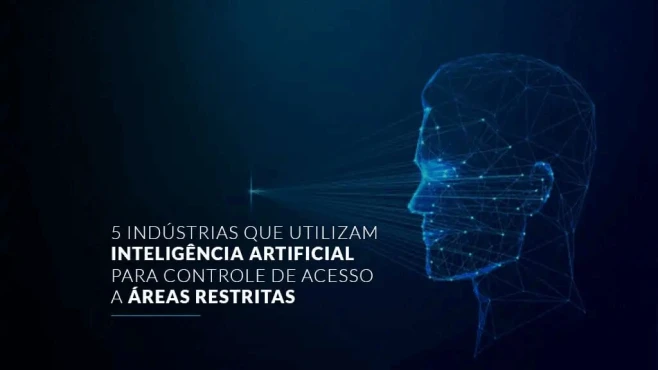
From areas ranging from autonomous transportation to virtual doctors, artificial intelligence (AI) is transforming the way we live, work, travel, and do business in the 21st century. But did you know that it can be used as a powerful integrated tool in access control and security systems across various market sectors? Controlling access to restricted areas is of enormous importance for the efficient internal functioning of several sectors, because to ensure the safety of processes, individuals, and even materials, it is necessary to have a real-time traceability capability that acts as a kind of guardian and prevents the escalation of potential problems. Generally, access control solutions work by identifying an individual, analyzing the permissibility of entry and exit of the objects they carry, authorizing that they actually have access to the resource or location, and then associating their actions with their name for auditing purposes. When this type of control is performed by humans alone, the chances of visual assessment errors can be very high due to the immense difficulty that exists in identifying, memorizing, and tracking patterns of employees entering and leaving a specific location. Therefore, recent studies show that there is an exponential increase in the use of Artificial Intelligence by various companies for controlling employee access to production centers.
Some of the industries that benefit from this technology are:
The Pharmaceutical Industry and the dangers of the lack of access control
It is of utmost importance for the pharmaceutical industry to maintain strict control over access to restricted areas of a production site, as the safety of both the employees who interact with certain chemicals and the production processes themselves depends on it, which can be affected when unforeseen external factors interact with them. For example, if employees who are not properly equipped enter specially conditioned laboratories during the testing or generation of a product, some substance could intoxicate their body.
Speak with one of our specialists and discover how Pix Force can transform your business
The Food Industry
Controlling food quality can become a challenge in workplaces where daily foot traffic is highly hectic. For this reason, in both food factory production lines and restaurants, care and adherence to safety requirements become extremely important.
The Mining Industry
In the mining industry, safety control is fundamental. Every year thousands of workers suffer occupational accidents in this sector due to a lack of safety, and often better monitoring of employees and their working conditions could have been enough to reduce both the number of incidents and the severity of the damage suffered by workers. In this sector, the correct verification of employee entry with their appropriate safety equipment is essential.
The Automotive Industry
In this sector, it is also extremely important that every employee enters the production lines with the appropriate equipment to maintain their proper safety (such as helmets and industrial goggles), as any unforeseen incident can become a risk to their lives. And on the other hand, intelligent and automated control would also contribute to preventing potential losses or theft of materials in factories.
The Banking Industry and Access Control
With more efficient and automated control of restricted areas, increased security in the banking industry can make all the difference.

Fabio Caraça
Fábio Caraça is the Chief Growth Officer at Pix Force. He leads Pix Force's transformation into a scalable SaaS operation, combining strategic vision, culture, and high-impact execution.